Hey, we’re online and here to help you anytime! You’re one step closer to building a stunning mobile app for your e-commerce store. Get on a call with us to see Vajro in action.
Hey, we’re online and here to help you anytime! You’re one step closer to building a stunning mobile app for your e-commerce store. Get on a call with us to see Vajro in action.
Mobile apps have become a must-have for ecommerce brands that want to move beyond traffic acquisition and drive repeat engagement and retention.
As customer acquisition costs rise and discovery becomes more fragmented, brands need owned environments where relationships compound instead of resetting with every visit. A well-built mobile app gives brands that control, turning one-time shoppers into returning customers through faster experiences, direct communication, and personalised journeys.
But not all app builders are built for this stage of growth. The right platform supports loyalty programs, personalised merchandising, and app-led product launches, while integrating cleanly with Shopify and other tools like Klaviyo, LoyaltyLion, Klarna, Yotpo, etc.
This comparison guide breaks down the best Shopify mobile app builders based on how they support retention, loyalty, and repeat revenue.
Mobile app builders for Shopify stores, compared
A mobile app delivers value when it supports a specific growth goal: driving repeat purchases, increasing customer lifetime value, or strengthening launch execution.
App builders vary in how directly they support these outcomes. Some platforms emphasise fast deployment and standard layouts. Others support deeper retention mechanics, personalised experiences, and lifecycle-driven engagement.
Below are the top 10 Shopify app builders based on the problems they solve, the brands they serve best, and the retention use cases they enable.
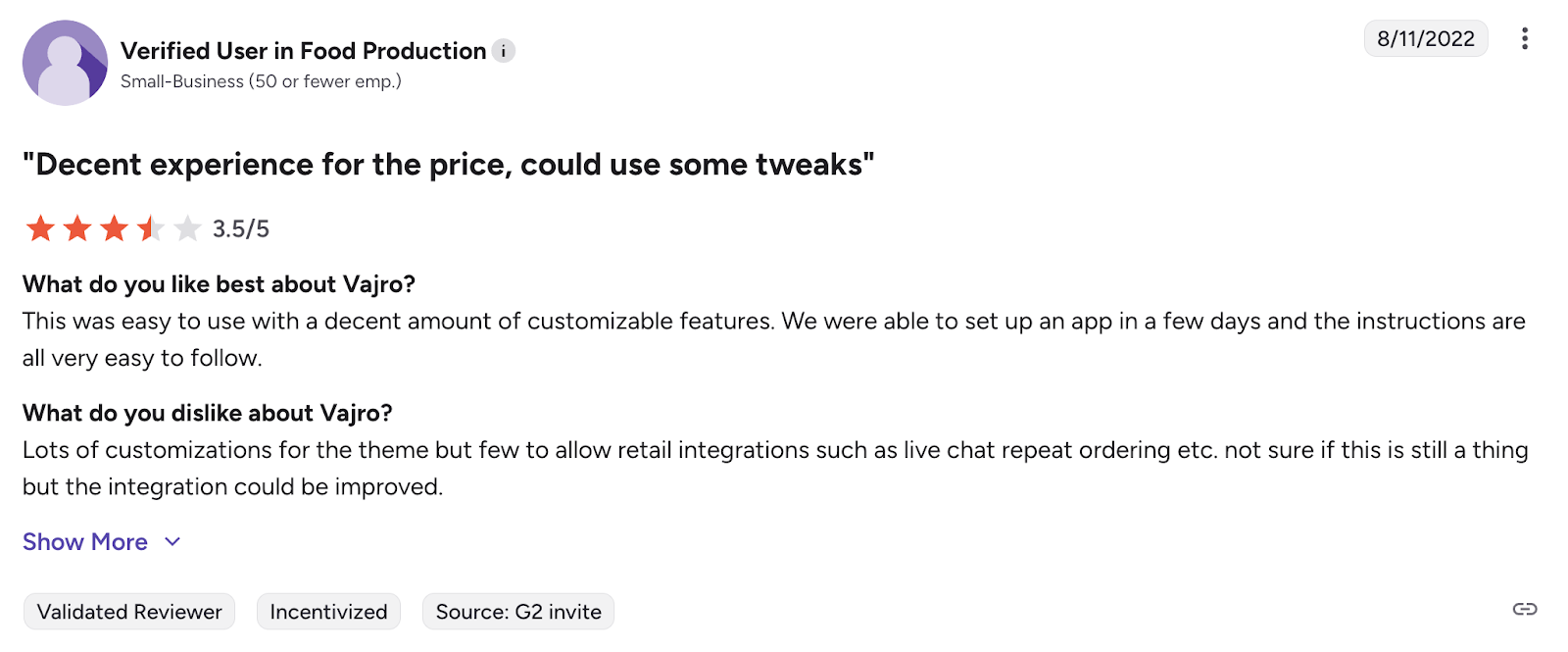
Superfans.io (formerly Vajro)
Ideal for: Mid-to-large DTC brands that want to run retention, loyalty, and launches through their mobile app, and require deep customisation and lifecycle control.
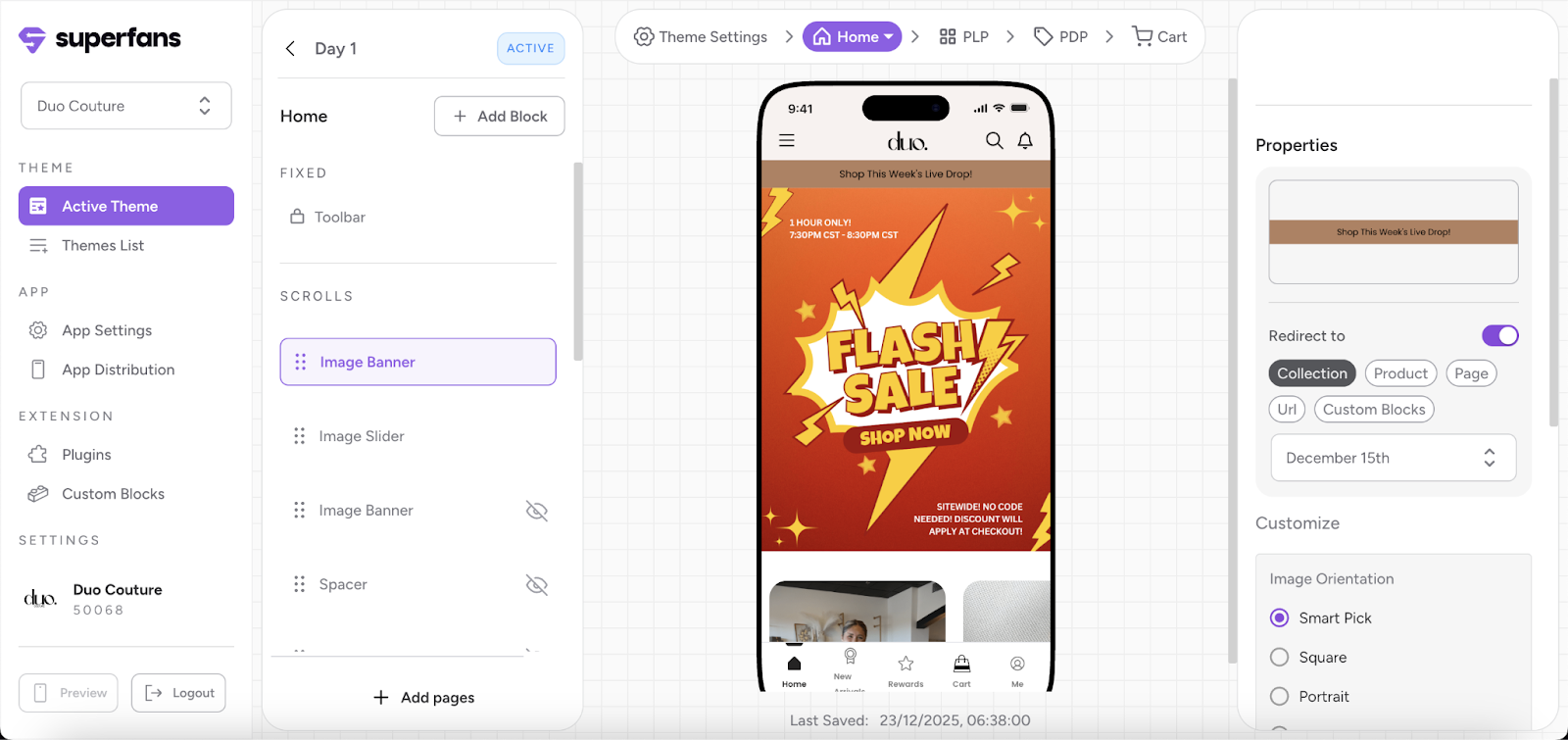
Superfans.io is a Shopify-native mobile app platform built for brands that treat their app as long-term retention infrastructure. The app becomes the primary surface for launches, loyalty visibility, and VIP access, while carrying customer context forward across sessions.
Superfans.io follows a co-building approach, enabling teams to design app experiences that evolve with merchandising strategy, launch cadence, and customer behaviour. Deep Shopify and Klaviyo integrations support cohort-based journeys, gated access, and high-intent push flows that stay aligned with real-time data.
Pricing: One flat $1,000 per month plan with all features, full strategy and execution support, no onboarding fees, and no growth tax. Plus a custom plan for brands with extended build needs.
Use cases it enables:
App-led product launches with VIP access, staggered entry, and cohort-aware journeys.
Personalised home screens and in-app experiences that adapt to behaviour.
Loyalty visibility, rewards, and gated content for high-value customers.
Push notification flows synced with Klaviyo segments and lifecycle automation.
Ongoing iteration of app design and layouts without engineering involvement.
Pros:
No-code builder that supports fast iteration and weekly updates.
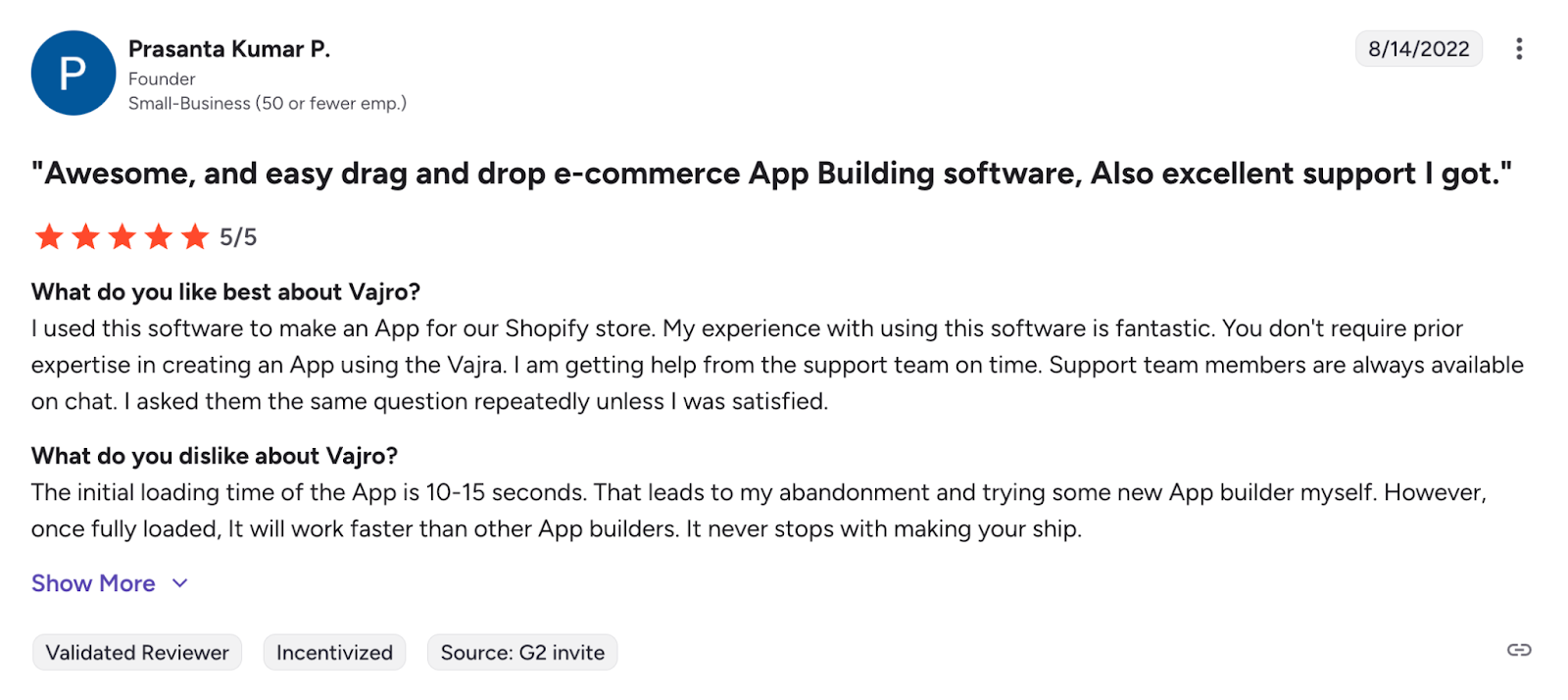
Strong, hands-on customer support and co-building approach.
Widgets and layouts designed for ecommerce merchandising and launches.
Predictable pricing that stays stable as revenue grows.
Designed to increase app-engaged LTV through retention-first mechanics.
Cons:
Initial app load time can vary in some setups.
Better suited to growth-stage and scale-stage brands than very early teams.
Some integrations may require additional setup effort.
Ideal for: Mid-sized to large Shopify and Shopify Plus brands that want to launch a polished mobile shopping app quickly, with strong Shopify sync and push-led promotions.
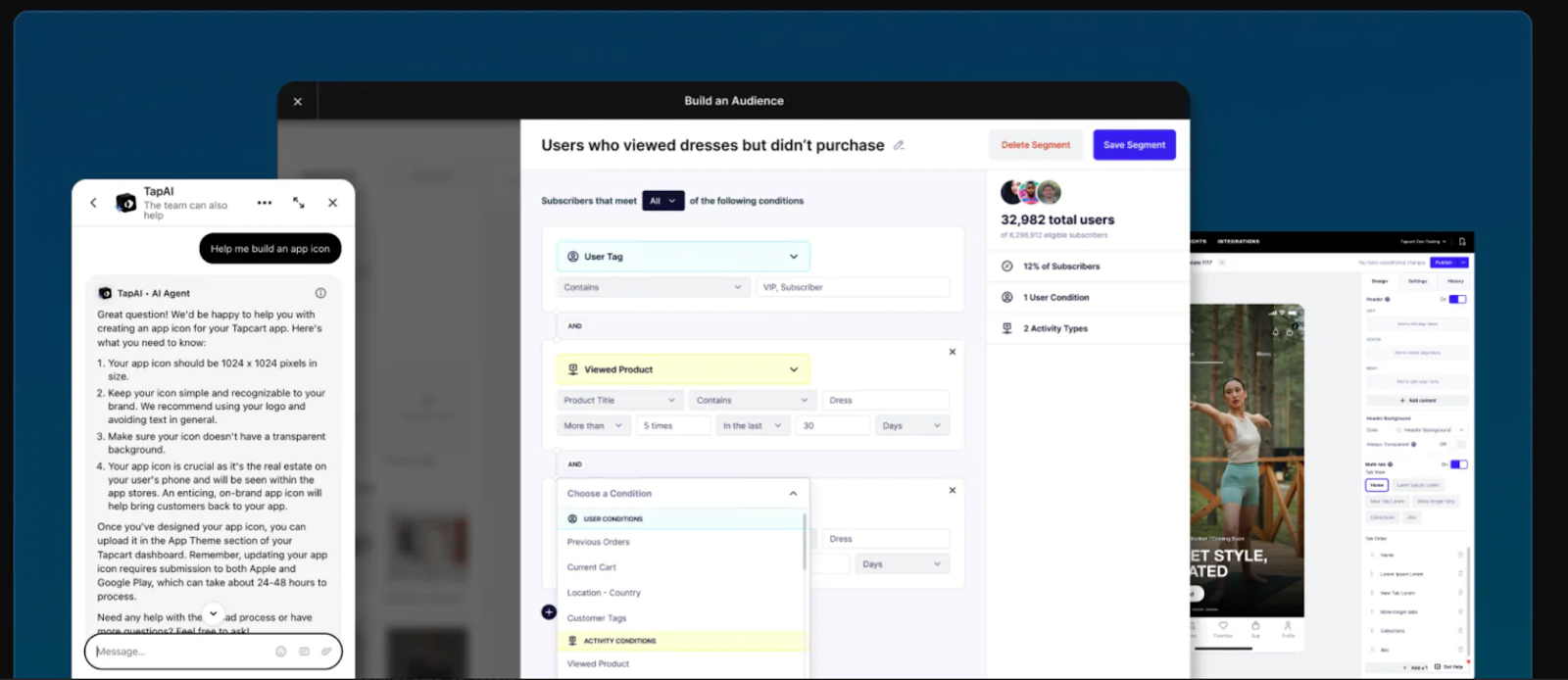
Tapcart is a Shopify-native mobile app builder that turns an existing Shopify store into a fully functional iOS and Android app. The platform is designed for speed to launch and ease of use, with a no-code, drag-and-drop editor and real-time syncing of products, collections, inventory, pricing, and discounts.
Built-in push notifications and a mobile-optimised checkout help brands re-engage shoppers and drive mobile revenue without engineering involvement.
Pricing: Starts at $250 per month, with tiered plans and additional charges based on in-app GMV or scale.
Use cases it enables:
Fast launch of native shopping apps connected directly to Shopify.
Push notification campaigns for promotions, product drops, and cart recovery.
Mobile-first checkout experiences with multiple payment options.
Integration with popular ecommerce tools like Klaviyo, Yotpo, and LoyaltyLion.
Consistent storefront-style app experiences across iOS and Android.
Pros:
Easy no-code setup with a drag-and-drop builder.
Real-time Shopify sync for products, pricing, and inventory.
Built-in push notifications and abandoned cart recovery.
Wide ecosystem of Shopify integrations.
Smooth, mobile-optimised checkout flow.
Cons:
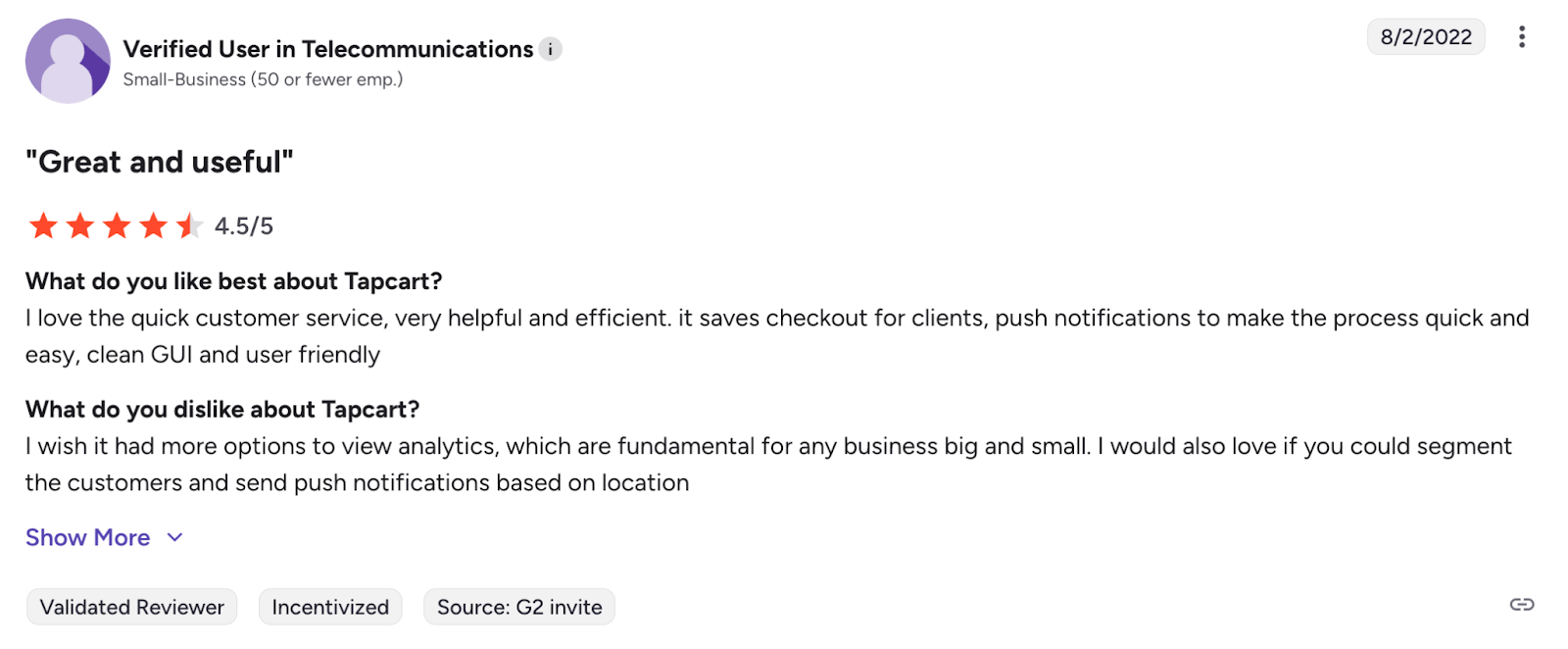
Pricing scales with usage and can become expensive as performance grows.
Customisation is largely limited to storefront-style layouts.
Limited depth for advanced retention, loyalty, or community-driven experiences.
Analytics and segmentation capabilities remain relatively basic.
Ideal for: Small to mid-sized Shopify and Shopify Plus brands that want a fast, no-code way to launch branded mobile shopping apps with essential engagement features.
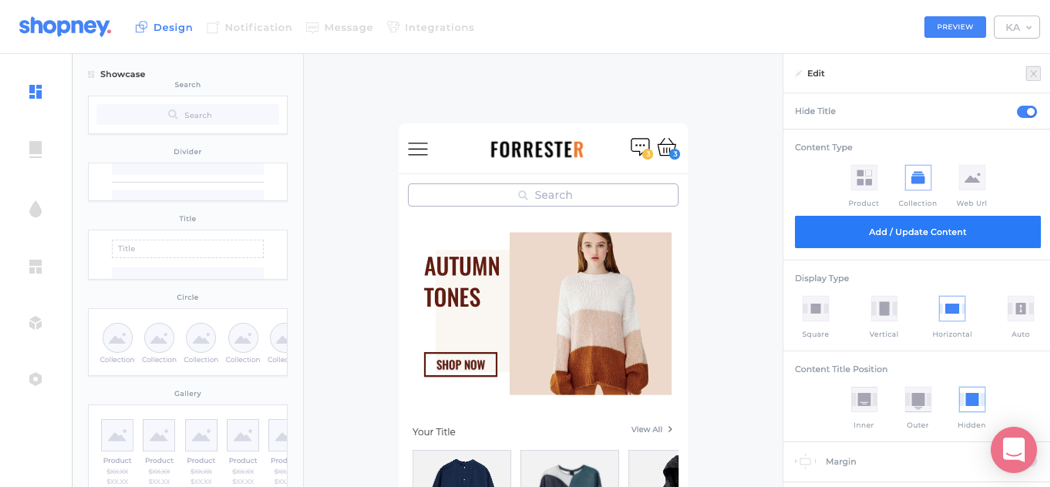
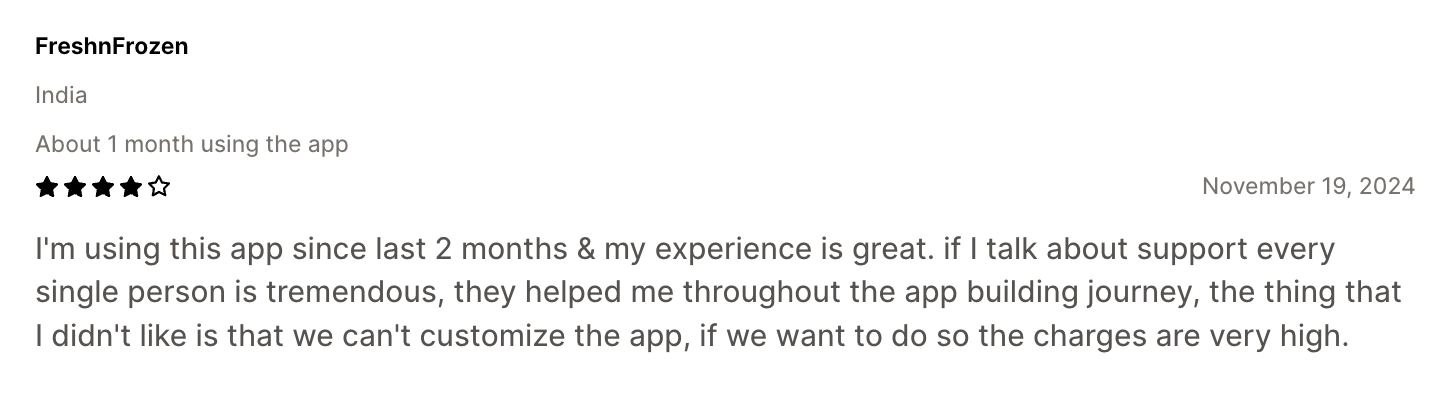
Shopney is a Shopify-focused mobile app builder designed for speed and simplicity. It allows merchants to convert their Shopify store into native iOS and Android apps using a drag-and-drop editor, making app creation accessible without app development experience.
Shopney emphasises branded presentation and quick setup, helping brands mirror their storefront inside the app while using push notifications and in-app tools to drive engagement and sales.
Pricing: Plans start at $149 per month, with tiered pricing based on design elements, engagement features, and integrations.
Use cases it enables:
Fast launch of branded iOS and Android shopping apps.
Push notifications for promotions, back-in-stock alerts, and abandoned cart reminders.
Theme-based app design aligned with the Shopify storefront.
In-app live chat for customer support and conversion assistance.
Integrations with common Shopify apps for core ecommerce functionality.
Pros:
Very easy to set up with a no-code, drag-and-drop builder.
Strong focus on branding and storefront consistency.
Responsive customer support during onboarding.
Accessible pricing for smaller Shopify stores.
Cons:
Limited depth for advanced retention, loyalty, or community-led strategies.
Feature availability varies significantly by pricing tier.
Performance issues on homepage load times for some stores.
Less suited for brands with complex workflows or scale-stage requirements.
Ideal for: Small to mid-sized Shopify brands that want a highly customisable, mobile-first app with built-in loyalty and engagement tools, without relying on developers.
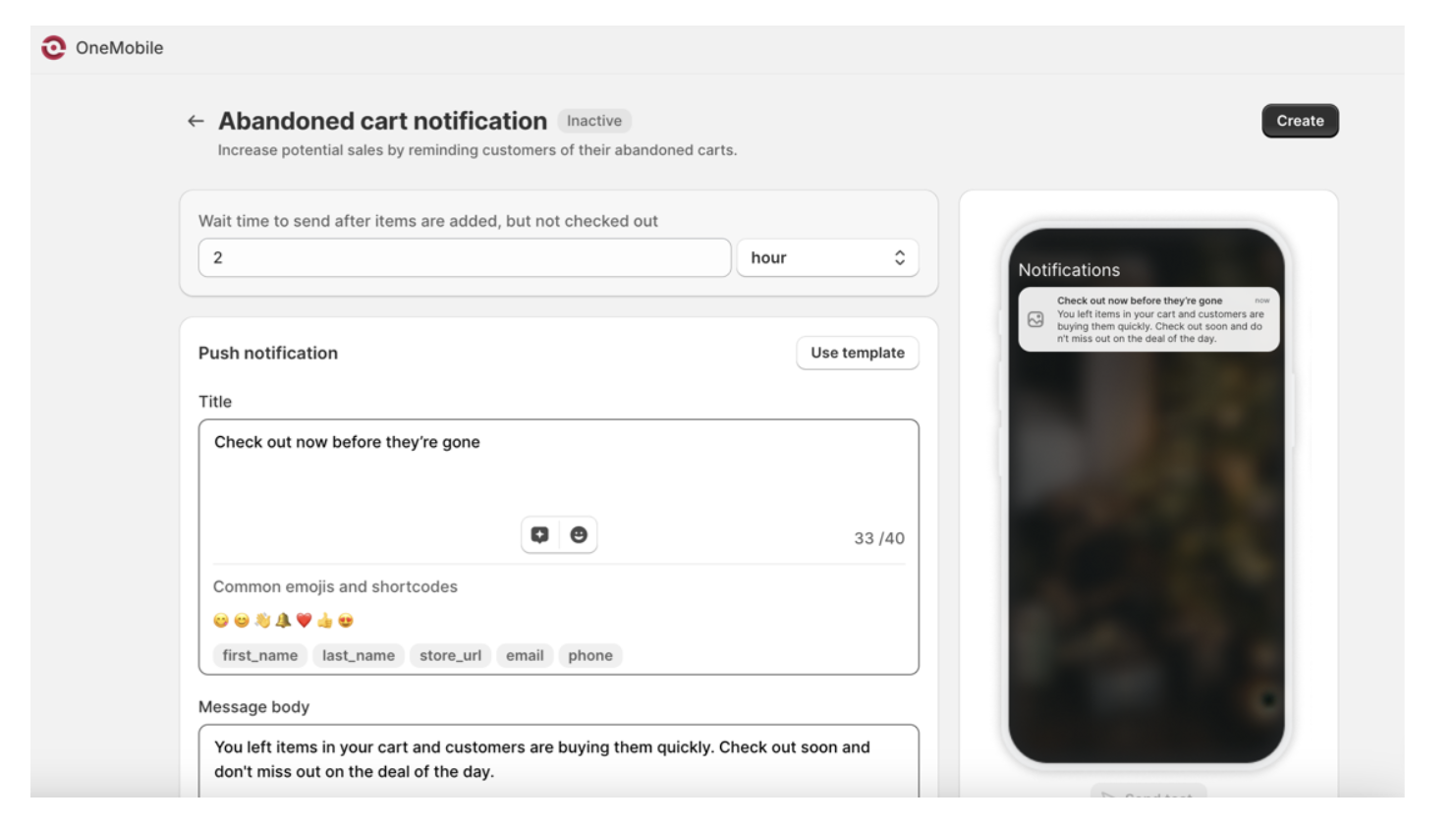
OneMobile is a Shopify-focused, no-code mobile app builder designed to help merchants create fast, branded mobile shopping apps with a strong emphasis on retention. The platform syncs with Shopify in real time and gives brands more control over personalisation, customer communication, and loyalty-driven experiences.
With support for push notifications, in-app messaging, and interactive formats, OneMobile lets teams shape how customers browse, engage, and return to the app over time.
Pricing: Starts at $99 per month, with revenue-based success fees and higher tiers for advanced features and support. The platform also offers a free plan with basic features.
Use cases it enables:
Branded iOS and Android shopping apps built with a drag-and-drop editor.
Personalised push notifications and in-app messaging for repeat engagement.
Built-in loyalty and rewards programs to encourage retention.
Wishlist, shoppable video, and enhanced search experiences on higher plans.
Performance tracking and lifecycle workflows integrated with Shopify and Klaviyo.
Pros:
Strong emphasis on branding and layout customisation.
Built-in loyalty and engagement functionality.
Fast native performance with real-time Shopify sync.
Well-rated customer support and onboarding.
Suitable for brands focused on retention and lifetime value.
Cons:
Pricing includes success fees tied to app revenue on paid plans.
Advanced engagement features are limited to higher tiers.
Greater setup complexity compared to basic app builders for very small stores.
Ideal for: Small to mid-sized ecommerce store owners that want a feature-rich mobile app with strong push notifications, analytics, and Shopify integrations, without building everything from scratch.
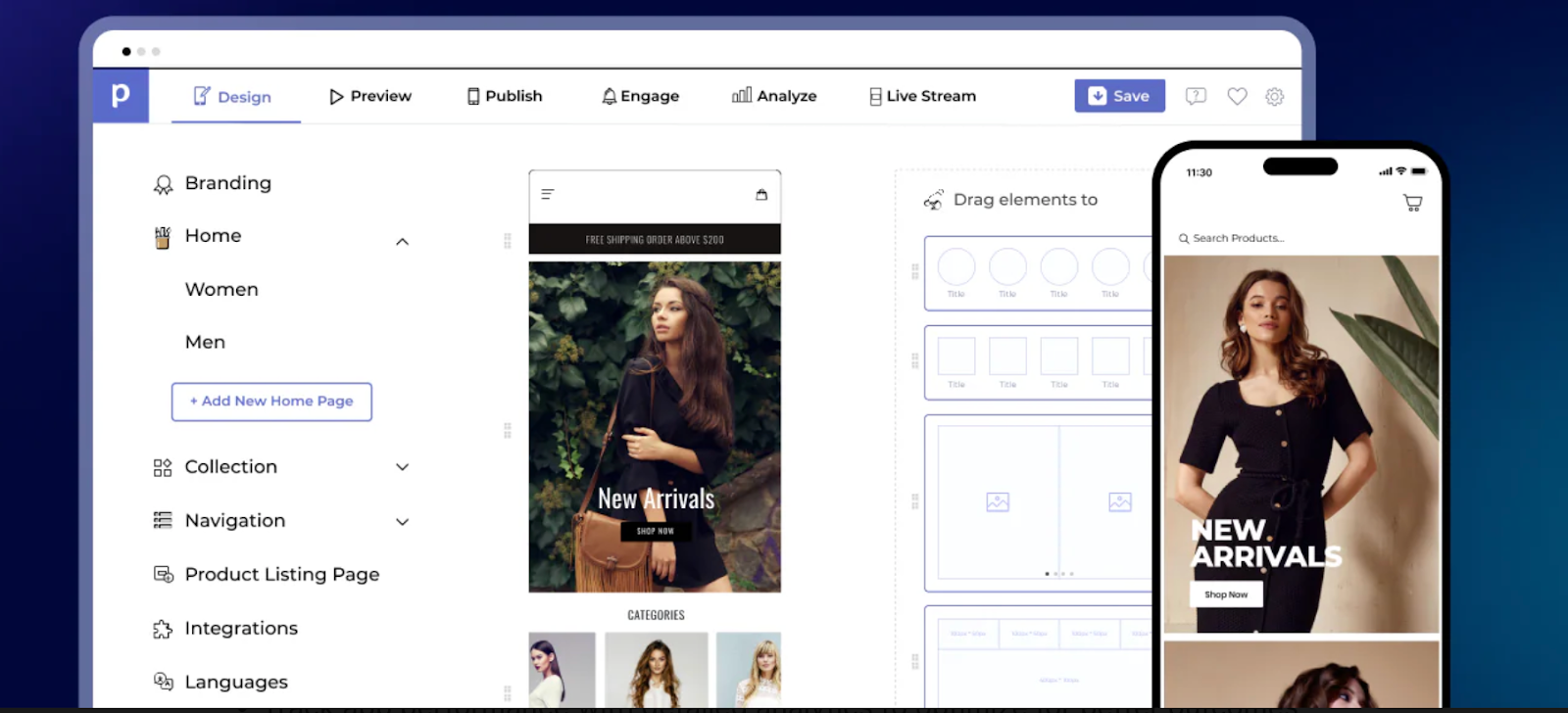
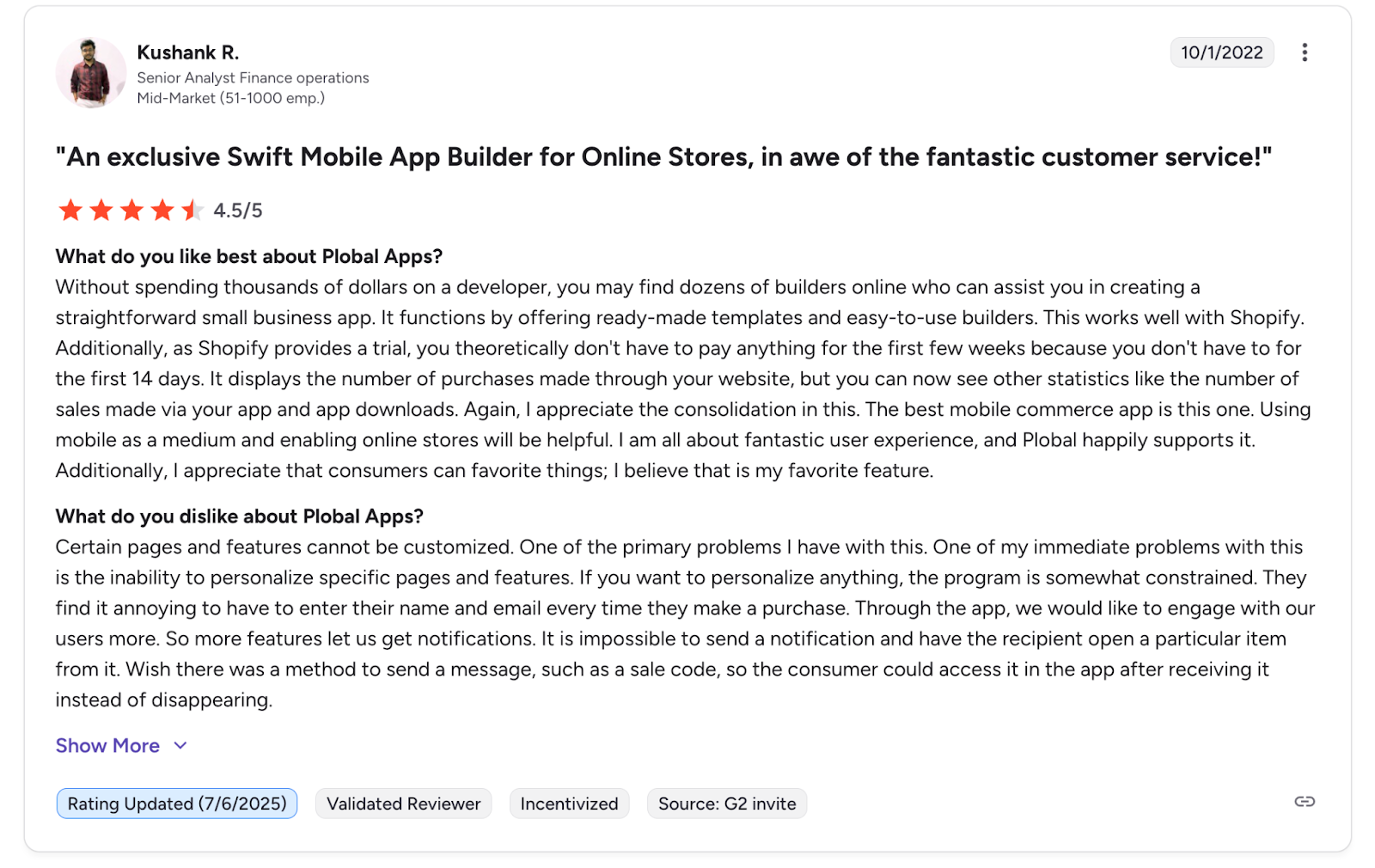
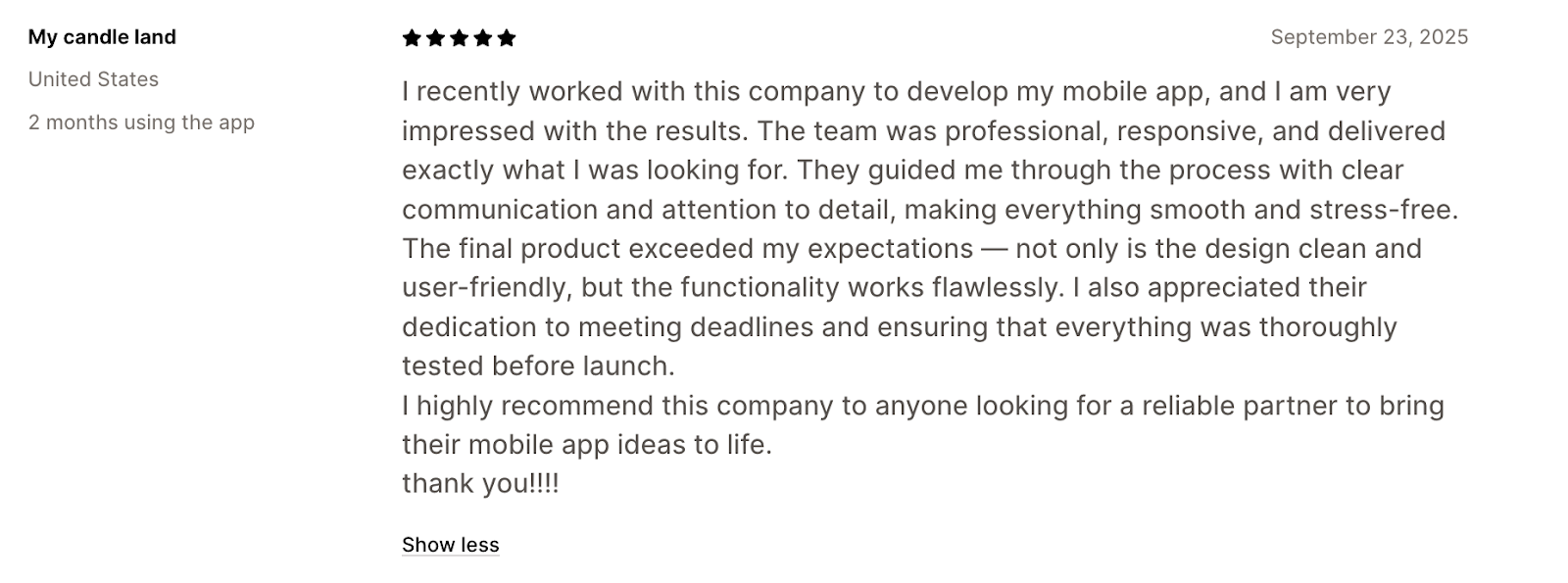
Plobal Apps is a mobile app builder focused on helping ecommerce brands turn their online store into fully native iOS and Android apps. The platform centres on branded app design, push-driven engagement, and analytics-led optimisation.
With a drag-and-drop editor and prebuilt components, teams can customise layouts, manage campaigns, and monitor performance without heavy engineering involvement.
Plobal Apps positions itself as a comprehensive mobile commerce platform, offering native apps, real-time sync with Shopify, and integrations with tools like Klaviyo, Yotpo, Recharge, and Gorgias.
Pricing: Starts free with a success-based fee, with paid plans from $199/month and enterprise plans from $1,199/month plus revenue-based fees.
Use cases it enables:
Launching native iOS and Android shopping apps connected to Shopify.
Push notification campaigns for promotions, abandoned carts, and re-engagement.
Branded app design using drag-and-drop layouts and templates.
Real-time analytics to track app installs, sales, and user behaviour.
Multi-language and multi-currency shopping experiences.
Product discovery features such as favourites and personalised recommendations.
Pros:
Quick setup with no-code, drag-and-drop app builder.
Strong Shopify integration and real-time sync.
Unlimited push notifications across plans.
Detailed analytics for app performance and customer behaviour.
Allows brands to launch an app without high upfront development costs.
Cons:
Customisation limits on certain pages and features, especially for advanced use cases.
Revenue-based fees can increase costs as app sales grow.
Push notification deep linking and persistence can feel limited.
App permission requirements on Android have raised concerns for some users.
Not always suited for highly bespoke or experience-led app strategies.
Ideal for: Small to mid-sized Shopify brands that want a fast, affordable way to launch a no-code mobile app with solid customisation and engagement features.
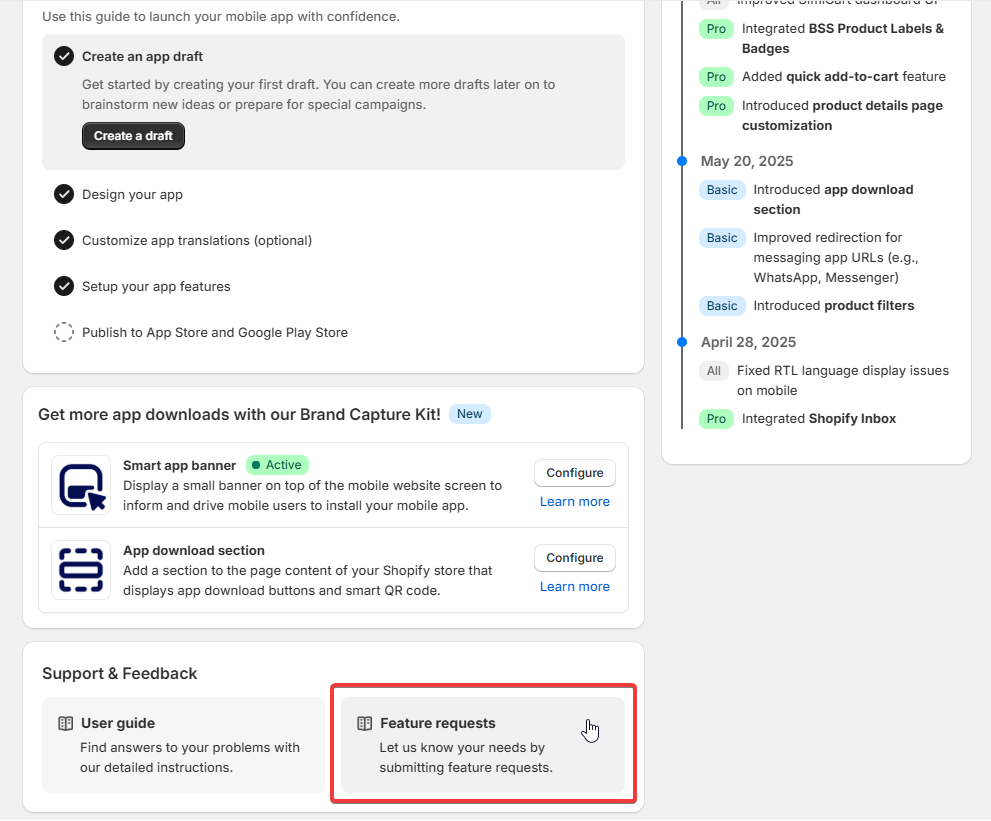
SimiCart is a Shopify-built mobile app builder designed for speed to launch and ease of use. It allows merchants to turn their Shopify store into native iOS and Android apps using a drag-and-drop editor and real-device previews.
With real-time sync, multiple design blocks, and built-in engagement tools, SimiCart helps brands create a functional, branded app without technical expertise or success-based fees.
Pricing: Free plan available; paid plans start at $49/month with no success fees.
Use cases it enables:
Rapid launch of native iOS and Android shopping apps.
Homepage and layout customisation using drag-and-drop blocks.
Unlimited push notifications for promotions, back-in-stock alerts, and segments.
In-app exclusive discounts, smart banners, and product labels.
Multi-language and multi-currency support for global stores.
Wishlist, quick add-to-cart, reviews, and live chat integration.
Pros:
Very fast setup with a no-code, drag-and-drop builder.
Free plan and low-cost entry with no success fees.
Real-time sync with Shopify products, pricing, and inventory.
Unlimited push notifications across paid plans.
Good range of design blocks and customisation options for smaller teams.
Cons:
Advanced customisation and design support are limited to higher tiers.
Less suited for complex retention strategies or large-scale operations.
Feature depth and flexibility may feel limited for scale-stage brands.
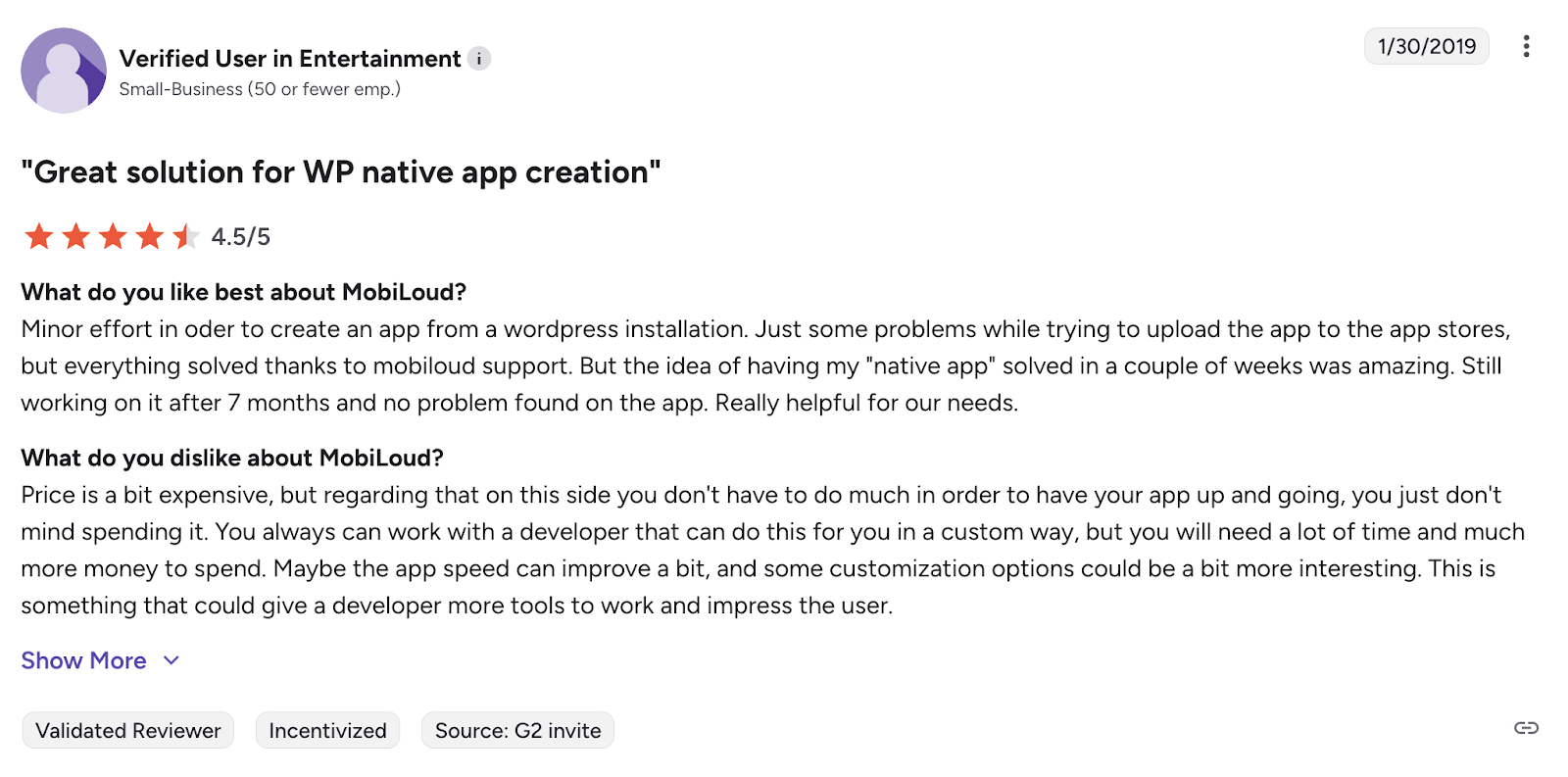
Ideal for: Small to mid-sized ecommerce brands that want to turn an existing Shopify (or WooCommerce or BigCommerce) site into a native mobile app without rebuilding their tech stack.
MobiLoud converts an existing ecommerce website into fully synced iOS and Android apps by mirroring the site’s design and functionality inside a native app wrapper. The app stays aligned with the website in real time, so products, pricing, inventory, and orders remain consistent without duplicate management.
MobiLoud operates as a fully managed service, handling app store submissions, updates, QA, and ongoing technical maintenance. This makes it a practical option for teams that want app benefits with low operational overhead.
Pricing: Plans start at $399 per month for iOS and Android apps, with managed growth plans at $799 per month and custom enterprise pricing from $1,499 per month.
Use cases it enables:
Converting an existing ecommerce site into native iOS and Android apps.
Real-time sync of products, pricing, inventory, and orders.
Push notifications for promotions, abandoned carts, and re-engagement.
In-app messaging for customer communication and updates.
Hands-off app maintenance with managed submissions and updates.
Pros:
Strong customer support and hands-on project management.
Minimal setup effort with no-code implementation.
Works well with complex sites and third-party integrations.
Eliminates the need for ongoing in-house app maintenance.
Can support improvements in repeat purchases and LTV
Cons:
Pricing can be high for smaller brands.
Wrapper-based approach limits deep native customisation.
Longer timelines for complex sites.
Less suited for highly bespoke, experience-led app designs.
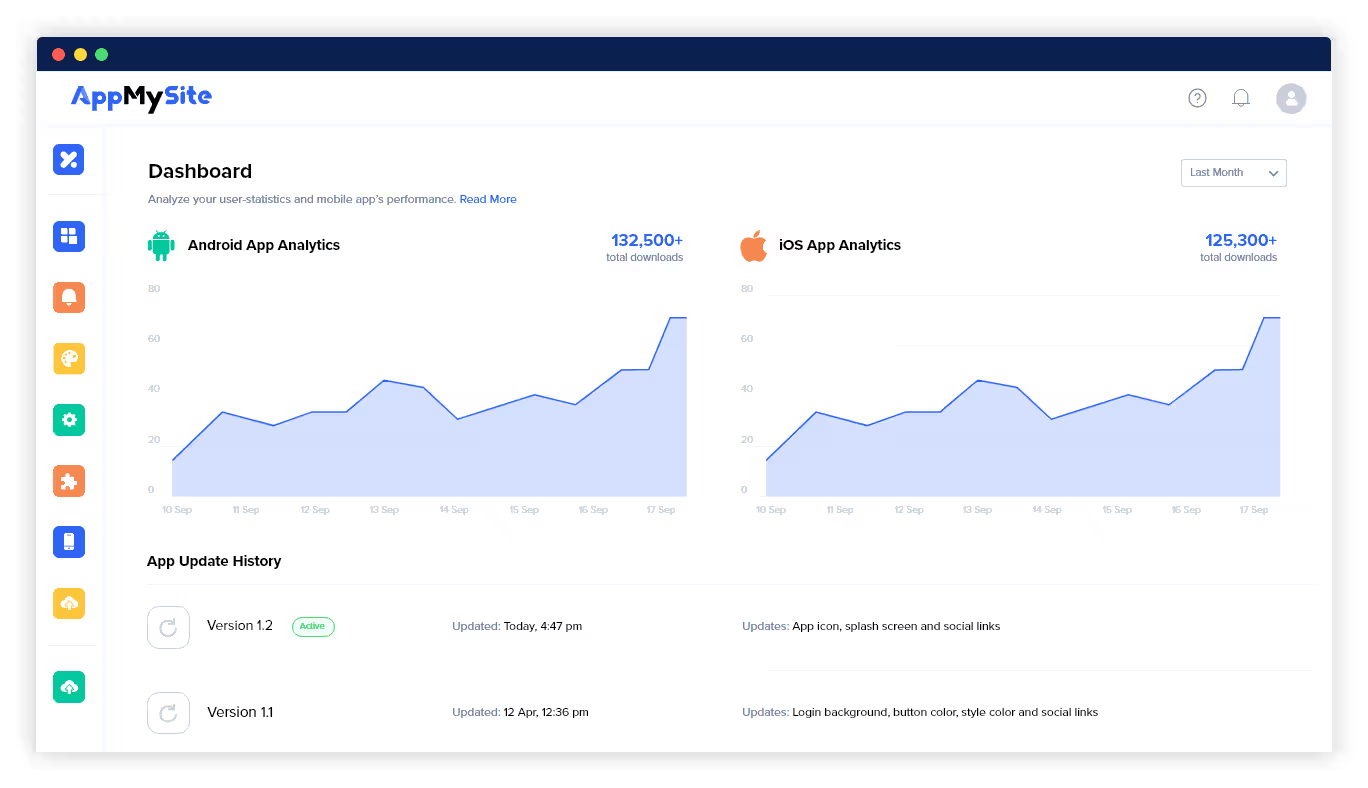
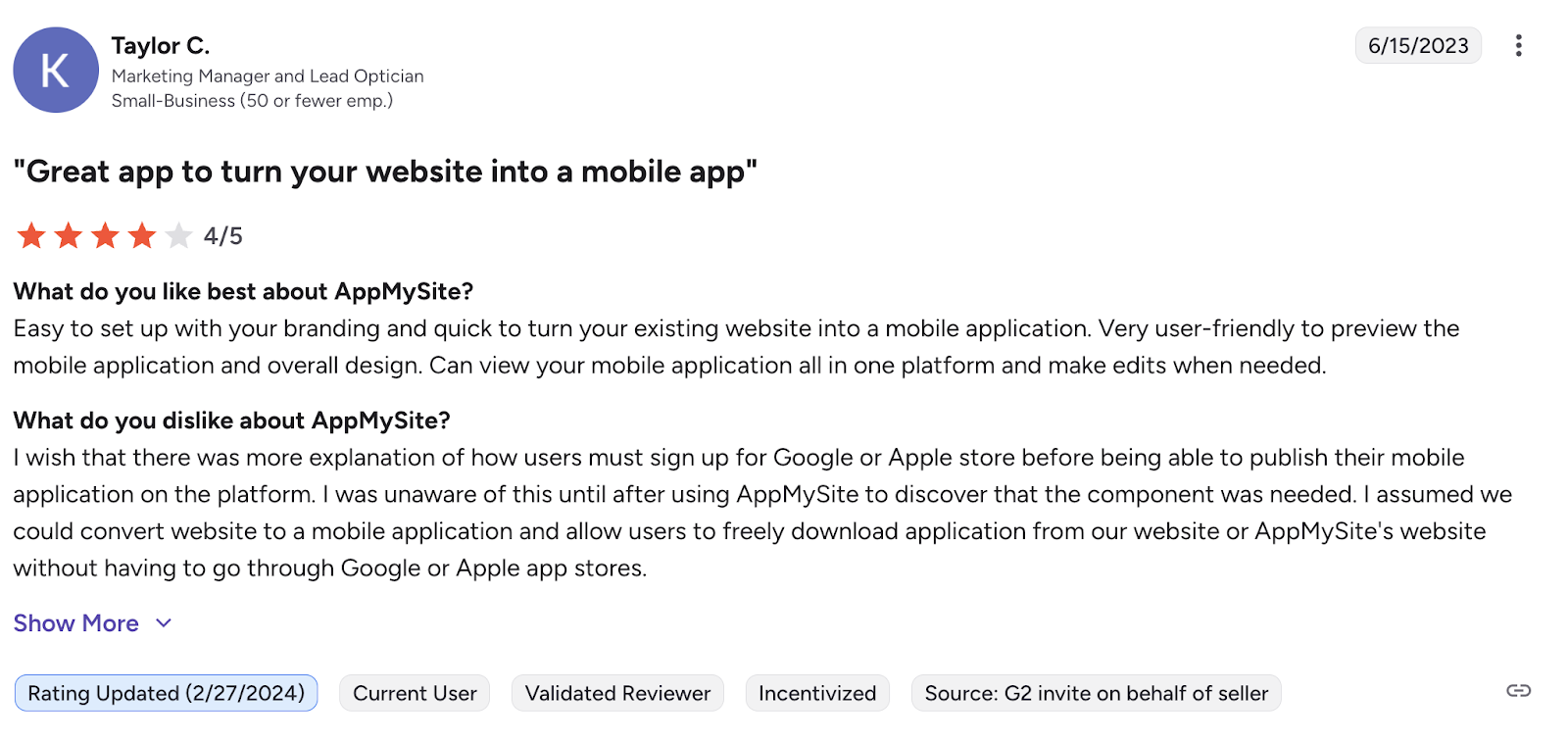
Ideal for: Small to mid-sized ecommerce brands that want a low-cost, DIY way to launch basic mobile shopping apps without deep customisation or complex workflows.
AppMySite is a no-code app studio built for speed and simplicity. It allows brands to convert their existing website into iOS and Android apps through a web-to-app approach, with Shopify supported alongside WordPress and WooCommerce.
The platform focuses on helping teams extend their mobile website into an app experience quickly, using drag-and-drop tools and real-time previews rather than custom app development.
Pricing: Free plan available, with additional charges depending on usage and publishing requirements.
Use cases it enables:
Quick conversion of an existing website into iOS and Android shopping apps.
Basic push notifications for promotions and announcements.
Simple automation to support repeat visits and modest engagement.
Real-time preview and fast publishing to app stores.
Lightweight mobile app presence for stores prioritising speed and cost.
Pros:
Affordable entry point compared to most mobile app builders.
Easy, no-code setup for non-technical teams.
Works well for WooCommerce-first and simple ecommerce setups.
Improves mobile shopping experience compared to a mobile website.
Cons:
Limited control over app design, layouts, and homepage structure.
Shopify integration is less deep than native Shopify app builders.
Not suited for advanced automations, SDK-based extensions, or complex workflows.
Best for basic shopping apps rather than long-term retention optimisation.
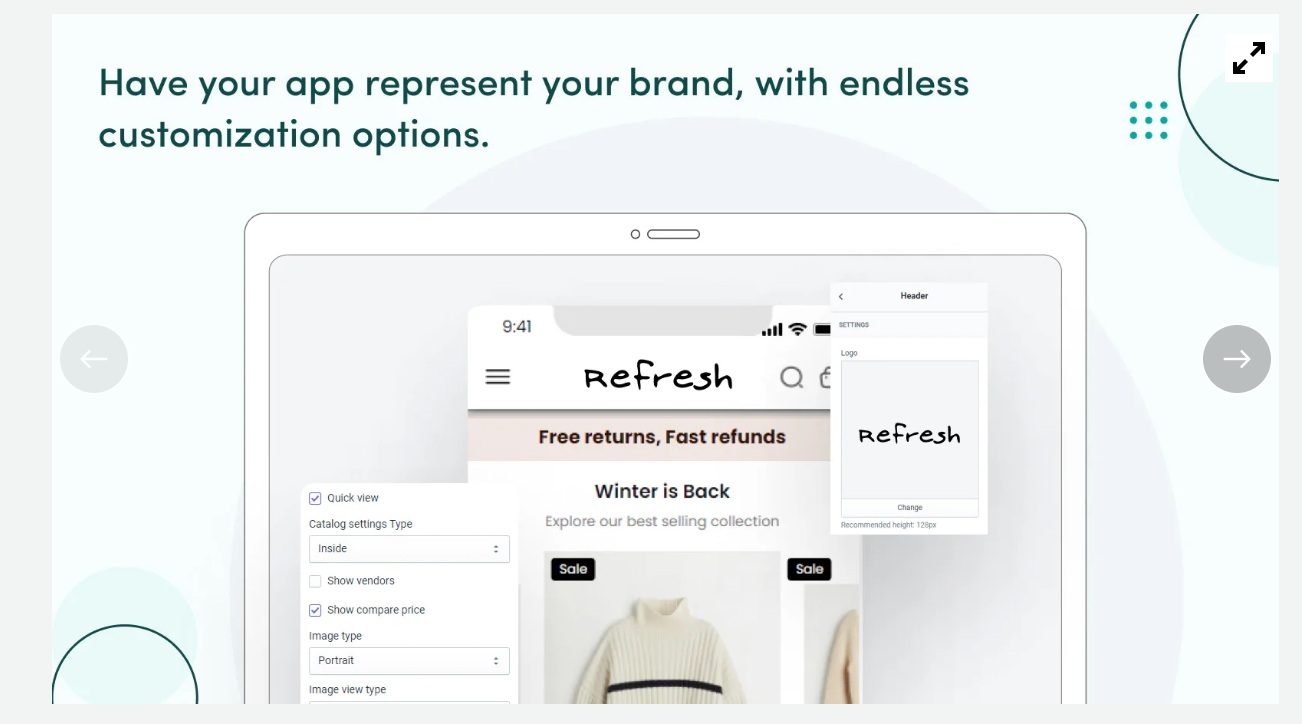
Ideal for: Small to mid-sized Shopify brands that want a customizable mobile app with strong push notifications, integrations, and optional B2B support.
Hulk Mobile App Builder is a no-code platform that helps merchants turn their Shopify store into branded iOS and Android apps using flexible templates and drag-and-drop sections. It focuses on fast setup and real-time Shopify sync.
The platform also supports extensibility through integrations, making it suitable for brands that want more control than basic storefront converters while keeping implementation manageable.
Pricing: Plans start at $79/month, with advanced features available on higher tiers up to $399/month.
Use cases it enables:
Launching branded iOS and Android apps connected to Shopify in real time.
Push notifications for promotions, abandoned carts, and segmented campaigns.
App-exclusive offers, upsells, cross-sells, and referral programs.
Live selling and product launch announcements.
Shopify B2B features such as custom shipping and account-based experiences.
Analytics and deep linking integrations with Google Analytics and Meta.
Pros:
Wide range of features across engagement, automation, and integrations.
No-code setup with drag-and-drop editor and flexible templates.
Unlimited push notifications on higher plans.
Strong integration ecosystem, including Klaviyo, Recharge, Judge.me, and Yotpo.
Responsive customer support, especially for custom integrations.
Cons:
Customisation relies on pre-built blocks and templates.
The integration library is focused rather than extensive.
App requires separate management from the website, adding operational overhead.
Ideal for: Small to mid-sized Shopify brands that want a no-code mobile app with strong engagement features, global support, and AI-assisted product discovery.
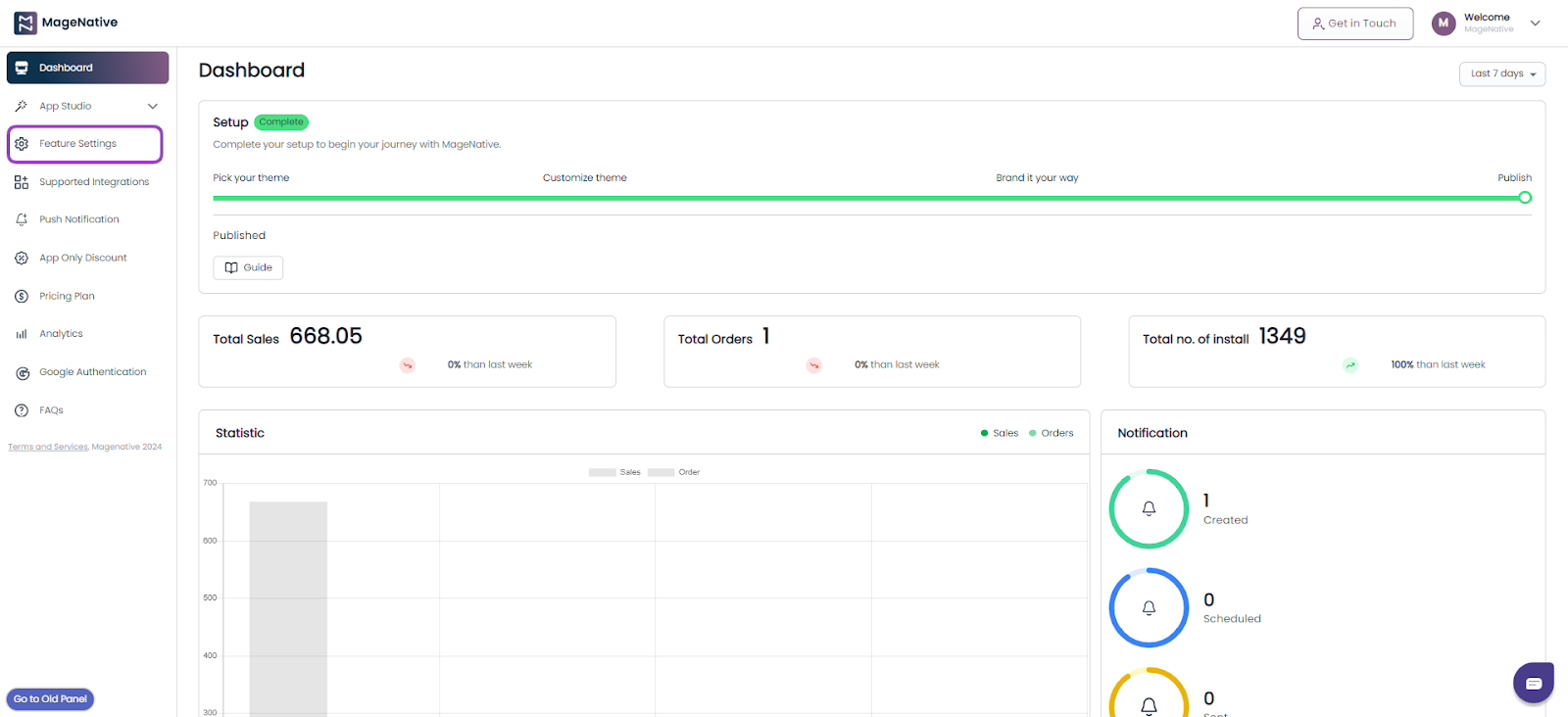
MageNative is a Shopify-focused mobile app builder that helps merchants create native iOS and Android apps without writing code. Built around a drag-and-drop editor, MageNative supports real-time Shopify sync and a wide range of engagement tools to improve mobile conversion rates and reduce abandoned carts.
The platform includes AI-powered product recommendations, personalised push notifications, and optional AR features to create more immersive shopping experiences.
MageNative is designed for brands that want flexibility without heavy development effort. It supports multi-language and multi-currency storefronts, handles app store submissions and updates, and provides 24/7 customer support.
Pricing: Plans start at $49/month, with higher tiers at $149 and $249/month depending on features and scale.
Use cases it enables:
No-code creation of native iOS and Android shopping apps.
Real-time sync of products, pricing, inventory, and customer data.
Personalised push notifications for launches, promotions, and abandoned carts.
AI-powered product recommendations and countdown timers.
Multi-language, multi-currency, and RTL support for global stores.
Optional AR features for immersive product browsing.
Pros:
Easy-to-use drag-and-drop builder with no coding required.
Strong focus on mobile conversion and cart recovery.
Wide range of engagement features, including AI recommendations.
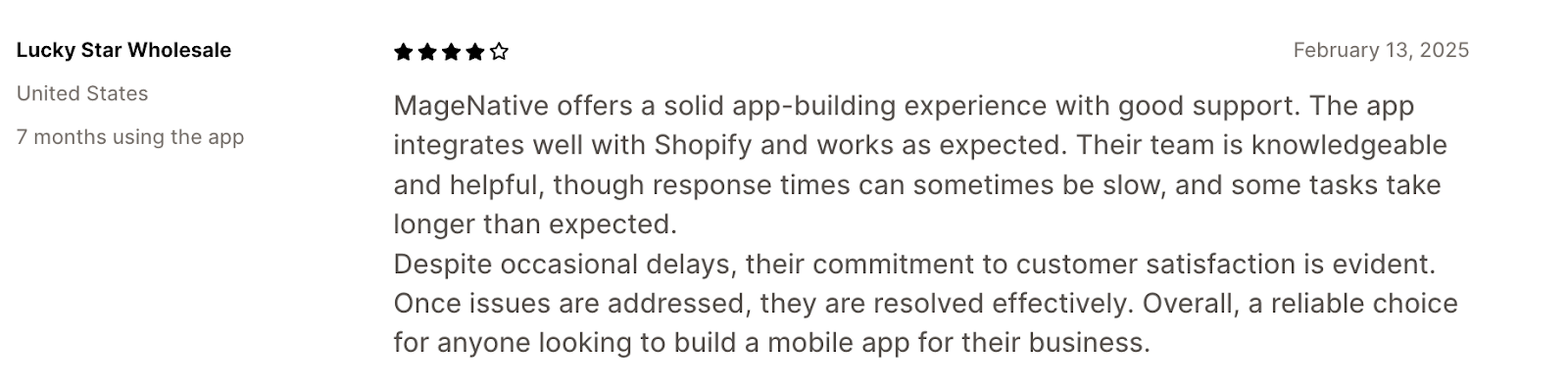
24/7 customer support, often praised for responsiveness.
Affordable entry point compared to many mobile app builders.
Cons:
Customisation depth can feel limited beyond preset layouts.
Some integrations may not sync perfectly with all Shopify apps.
Advanced features and design changes may incur additional costs.
App designs can feel dated without further customisation.
How to pick the right tool to build your mobile app
The right mobile app builder isn’t the one with the longest feature list. It’s the one that can keep up with how your brand actually grows after the first purchase.
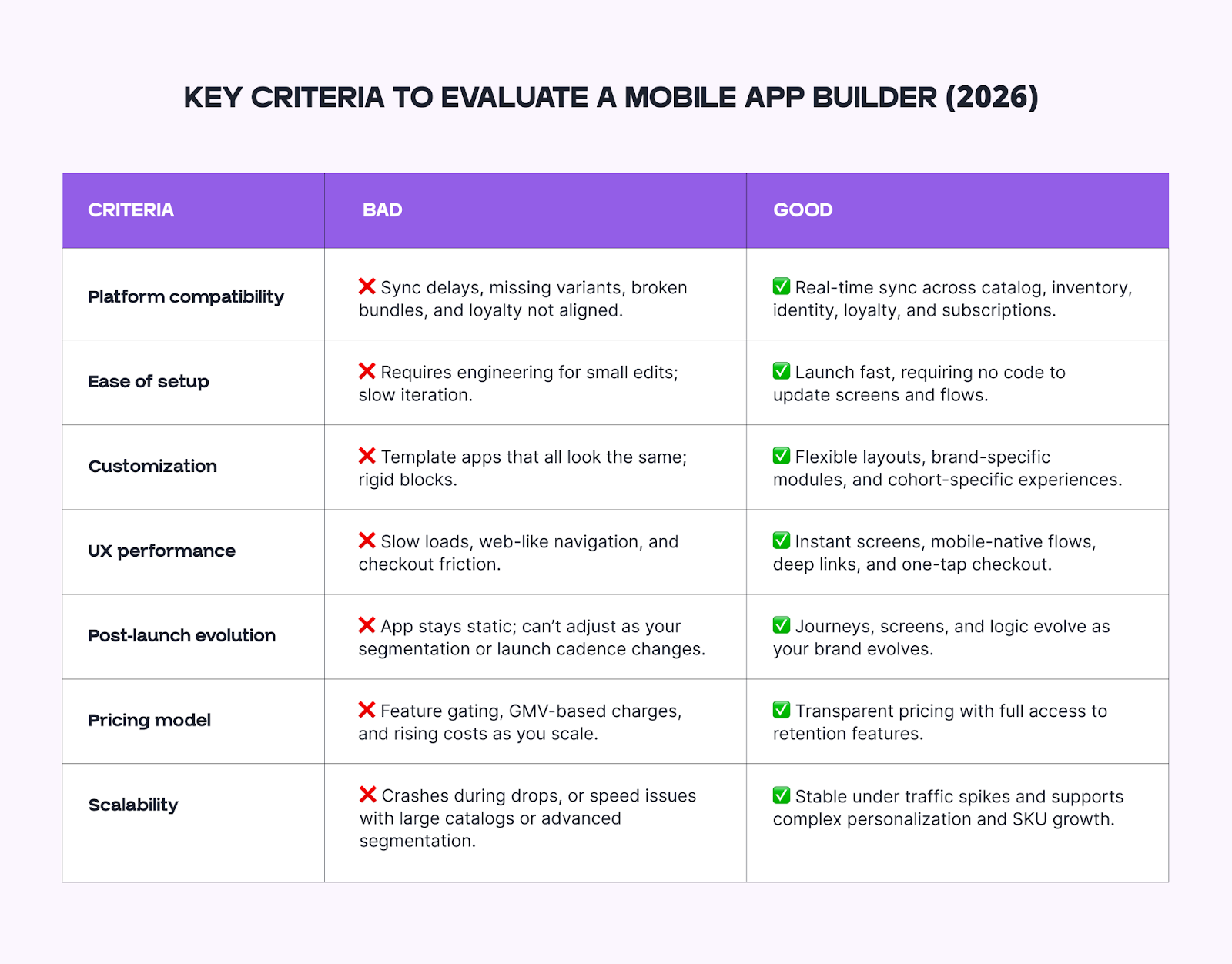
As retention, loyalty, and launches become core revenue drivers, your app builder needs to operate as infrastructure, not just a storefront wrapper. These criteria help you evaluate whether a platform will compound value over time or quietly cap your growth.
Platform: Your app builder should stay in real-time sync with Shopify, including inventory, variants, pricing, bundles, subscriptions, and customer identity. Delayed or partial syncing creates friction during launches and high-velocity sales moments.
Ease of setup: Fast onboarding and no-code controls let teams launch and iterate without engineering support. Strong builders allow merchandising or retention teams to update screens, content blocks, and launch layouts instantly.
Customization and branding flexibility: Your app should reflect how your brand merchandises and launches, not a generic template. Flexible layouts and modular design make it possible to support seasonal edits, bundles, and differentiated VIP experiences.
Customer experience: Navigation, search, checkout flow, deep linking, and performance directly impact retention. High-performing apps load quickly, preserve session context, support one-tap checkout, and remove friction from repeat purchases.
Support: Support should go beyond troubleshooting. The right partner helps evolve your app as strategies change (new cohorts, updated loyalty logic, or redesigned flows) without replatforming.
Cost: Pricing should stay predictable as usage and revenue scale. Avoid growth taxes, feature gating, or usage-based fees that penalize success. Retention channels should protect margin.
Scalability: The app must perform reliably during launches, traffic spikes, and catalog expansion. Scalability means supporting deeper personalization and loyalty layers without slowing down or rebuilding.
For a deeper breakdown of what matters as ecommerce apps mature, we recommend reading our blog on “Ecommerce Mobile App Builder: What to Look For in 2026.”
Drive higher engagement and sales with a mobile app
A mobile app drives engagement and sales when it’s built as long-term infrastructure, not a one-time launch. The right mobile app builder supports real-time sync with your Shopify store, flexible app design, personalised in-app experiences, and push notifications that keep customers engaged between purchases.
Superfans.io is built to meet those requirements. It connects your online store to a native mobile app in real time, adapts screens and flows instantly, and supports advanced launch without adding operational overhead.
As you scale retention strategies, the platform continues to support more advanced functionality without requiring a replatform. With predictable pricing and hands-on support, Superfans.io allows ecommerce teams to invest confidently in retention, customer engagement, and repeat revenue.
Book a demo to see how leading brands use Superfans.io to turn their mobile app into a durable engine for engagement, loyalty, and growth.
Thank you! Your submission has been received!
Oops! Something went wrong while submitting the form.
This is some text inside of a div block.
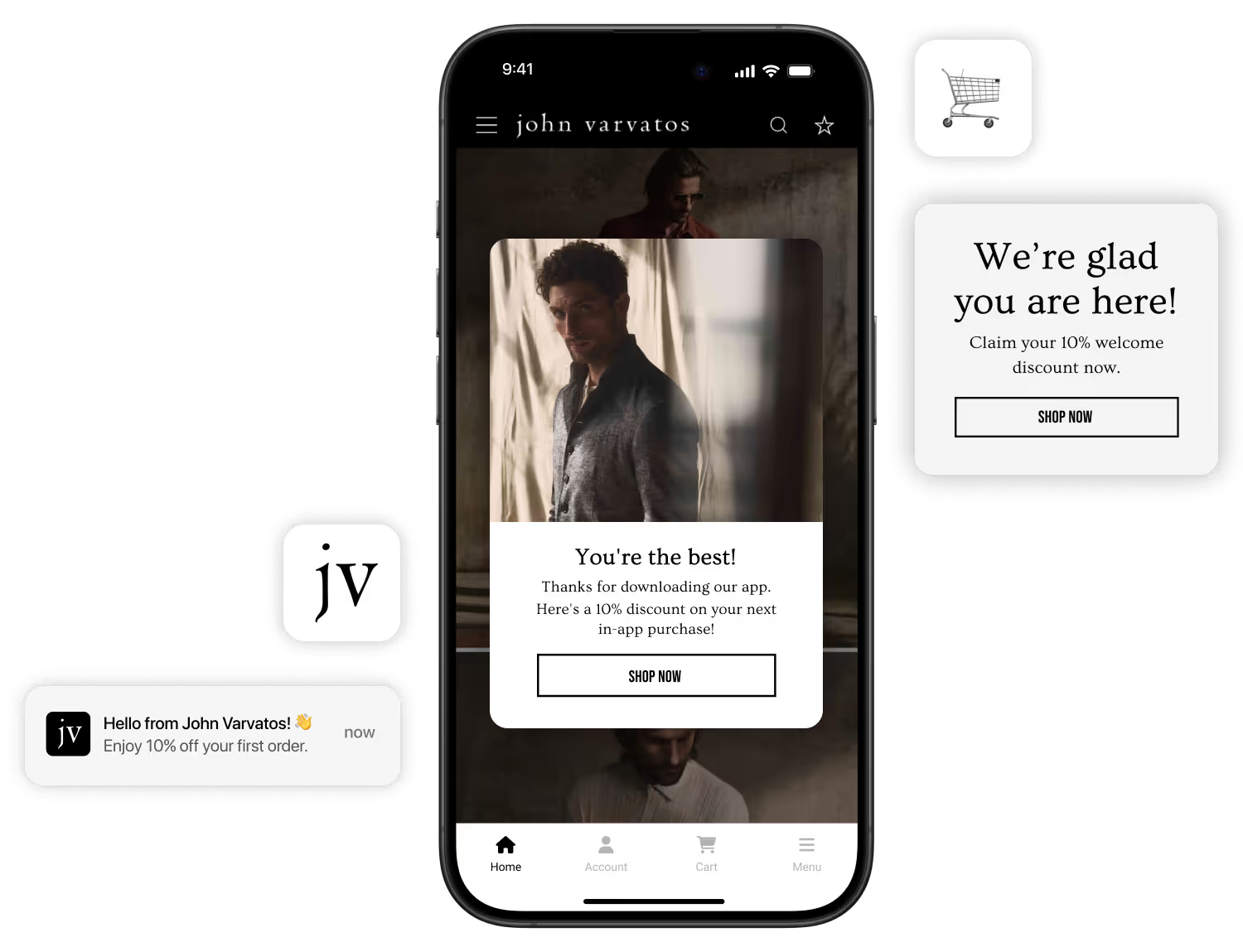
"Looking for creative push notification ideas? Check out our free templates and start customizing!"








.png)