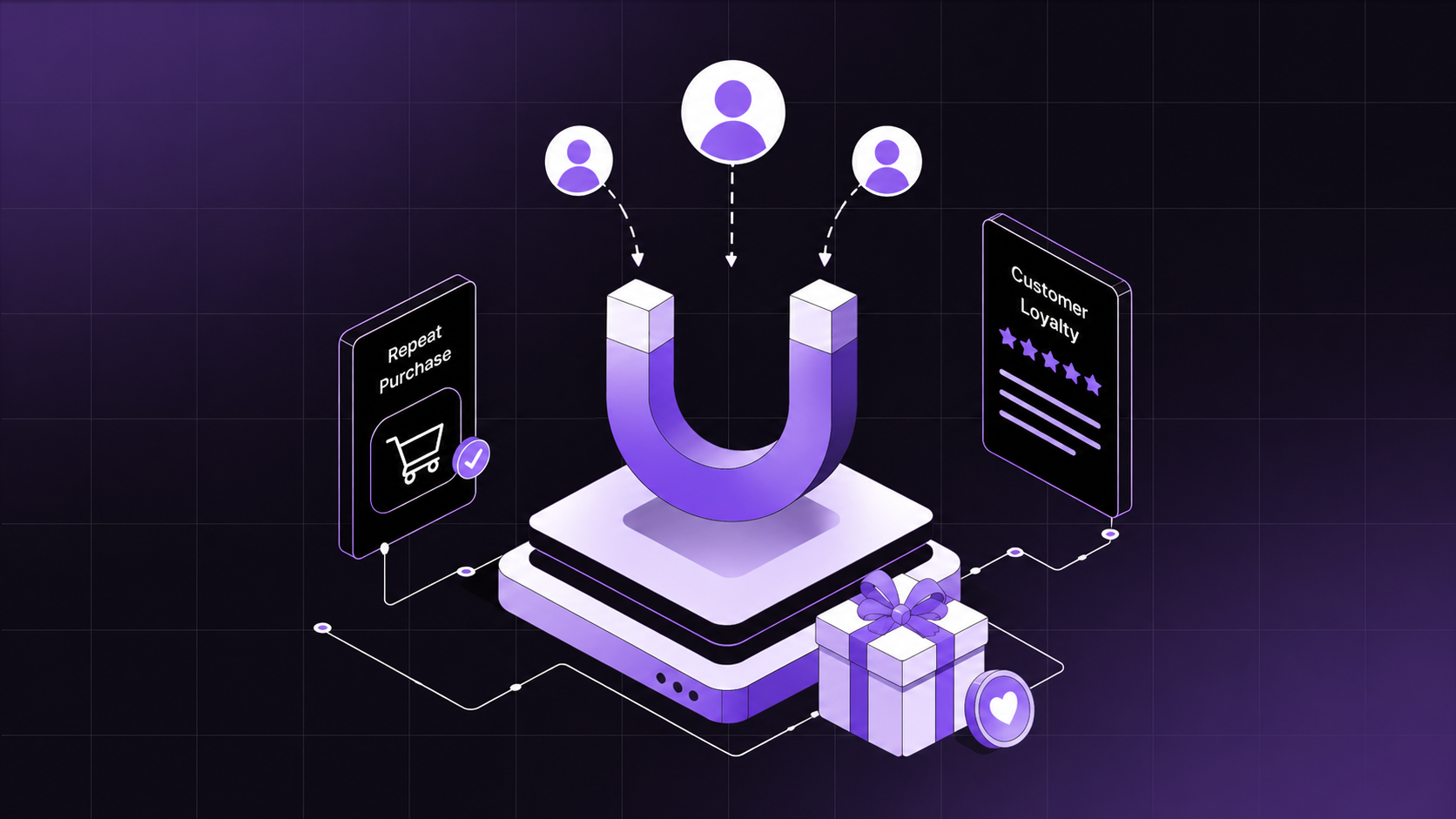

A brand community improves customer retention by giving shoppers a reason to come back between purchases. Members return to talk, vote, share and get early access, and that habit turns into repeat orders. Research on one retailer's online community found members spent 19% more after joining.
For ecommerce brands, that matters more every year. Acquiring customers keeps getting more expensive, and discounts teach shoppers to wait for the next sale. A community gives your best customers something a coupon can't: a place where they belong.
An ecommerce brand community is a space where a brand's customers interact with each other and with the brand, around shared interests, identity or use of its products. It can live on a social platform, a forum, a membership program or inside the brand's own mobile app. The difference from a social media following is that members talk to each other, not only to the brand. When shopping happens inside that same space, it's often called community commerce.
For retention, where the community lives matters. A community inside your own app sits next to the cart, product pages and push notifications, so a conversation can turn into a repeat purchase without anyone leaving. Every interaction is also first-party data you own.
Brands that grew last holiday season did it with existing customers. Klaviyo's BFCM 2025 recap found repeat-customer revenue grew 13.5% year over year while discounts fell, and called it "a loyalty story, not a discount story."
Points programs alone don't create that loyalty anymore, because almost every store has one. Shoppers now stay for access and belonging: first look at a drop, a voice in what launches next, and recognition from people who share their taste. Across 600+ app launches at Superfans, we've seen the same pattern. Brands that give their best customers a place to gather keep them longer than brands that only give them a discount.
Most ecommerce brands only hear from a customer when they buy. A community creates reasons to return in between: a new post, a poll, a daily check-in, a live event. Each visit keeps your brand in the shopper's routine, so when they need something, they come back to you without a paid reminder.
CanesWear, a Miami sports apparel brand, built its mobile app around game day. Fans earn reward points for checking in, follow a countdown to kickoff and predict the final score, then come back after the game to see the leaderboard.

Community participation is linked to higher spending. A University of Michigan study of a retailer's online community, "Social Dollars" (Manchanda, Packard and Pattabhiramaiah), found members' spending rose 19% on average after they joined, compared with similar customers who didn't. The lift held over time, showed up online and in store, and was strongest among members with more connections to other customers.
A related study by two of the same researchers, published in Marketing Science, found the biggest increase among customers who had spent the least before joining. A community helps bring occasional buyers closer to your best customers.
Discounts bring customers back once. Belonging brings them back repeatedly. When members feel part of something, the reason to return is the experience: early access, insider content and recognition. That lets you run fewer blanket sales and protect margin.
When you do run an offer, make it a member benefit. Superfans brands often run 25 to 30% off in the app when the website offers 20%. The offer works because it goes to people who already chose to be there.
Shoppers trust other customers more than brand copy. In a community, members show how they wear, use and style products, answer each other's questions and share what they wish they'd known. That reduces doubt before purchase and helps customers get more from what they bought, which makes a second order more likely.

Polls, quizzes and questions inside a community tell you what customers want, in their own words. Unlike tracking data, they told you directly, and you can use the answers in every channel.
Snag runs interactive polls in its app community and sends the answers to Klaviyo, so it can segment customers for seasonal retargeting. Superfans sends poll and quiz answers, product views, wishlist adds and drop sign-ups to Klaviyo as profile properties and events.

A community gives every launch an audience that's already paying attention. Members hear about a drop first, talk about it before it goes live and buy in the first hours. Across 600+ app launches, early access is the strategy that has most consistently outperformed every other app strategy we've tested.
United Vintage opened its winter drop to app users with a push notification. Over the next two days, that drop drove 24% of the brand's total revenue.
Engaged members create content and recommendations that reach people your ads don't. Their posts, reviews and photos give new shoppers proof from someone like them, and the members who post most become your natural ambassadors. Recognize them with badges or early access, and they'll keep posting.
A community is also a listening system. Recurring questions point to unclear product pages. Repeated requests point to your next product. Post-purchase check-ins catch problems before they become churn or a bad review.

Compare community members with non-members over the same period, and start with a few metrics that match your goal.
Members who join are often already your best customers, so compare cohorts that started at similar spend levels before you credit the community with the whole difference.
They work best together. A loyalty program rewards transactions. A community rewards participation.
Connect them: award points for check-ins, posts and poll votes, and show loyalty status inside the community. Superfans integrates with Smile.io, Yotpo, LoyaltyLion and Rivo, so you don't have to replace the program you already run.
For the full playbook, read our guide to ecommerce community building.
Superfans gives Shopify brands a native iOS and Android app with a community built in: a social feed for customer posts, polls and quizzes, daily check-ins and reward points, live selling, early access drops and push notifications. Community activity flows into Klaviyo, and it works with the 70+ tools already in your stack. Book a demo to see what a community could do for your retention.
It gives customers reasons to return between purchases, such as conversations, polls, check-ins and early access. Those visits build a habit and a sense of belonging, which leads to more repeat orders and less reliance on discounts.
Research suggests they do. The University of Michigan "Social Dollars" study found members of a retailer's online community spent 19% more after joining than comparable non-members.
A loyalty program rewards purchases with points or tiers. A community rewards participation with belonging and access. Many brands connect the two by awarding points for community activity.
Somewhere you own the relationship and the data. A community inside your brand's app sits next to shopping and push notifications, so engagement can turn into repeat purchases.
Compare members with similar non-members on repeat purchase rate, purchase frequency, average order value and lifetime value, and track how much revenue comes through your owned channel.
CanesWear's game-day app community with check-ins and a score predictor, Empire Collection's live selling community, and Kees's app community built on check-ins, polls and blog content.
"Looking for creative push notification ideas? Check out our free templates and start customizing!"