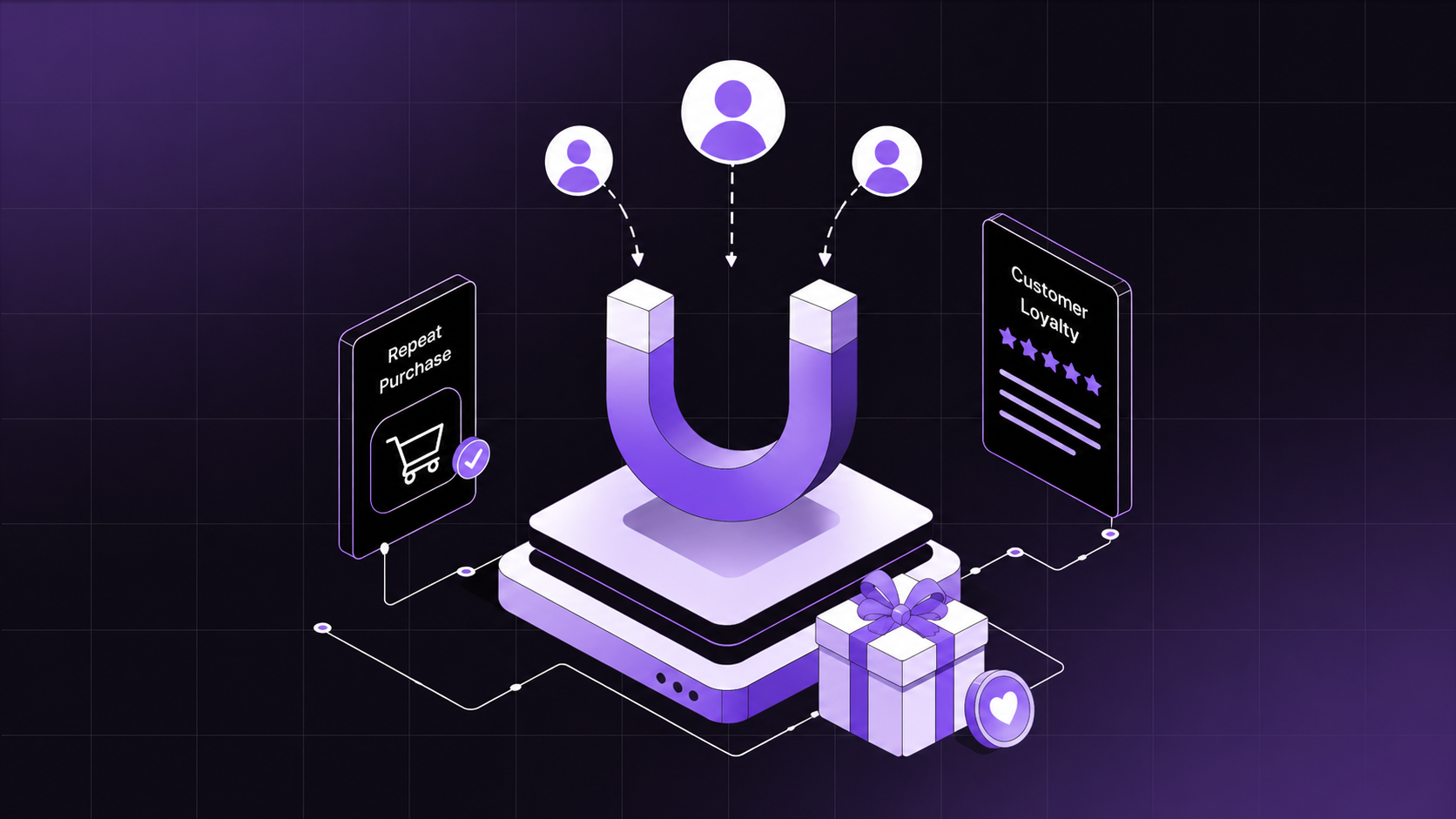
A customer places their first order. Then what?
For most ecommerce brands, that’s where the journey quietly breaks. The product gets delivered, the interaction ends, and the next purchase depends on whether the customer decides to come back on their own.
Growth starts to look different when you take control of that post-purchase moment. The first purchase gives you clear signals: what the customer chose, what they were looking for, and what they are likely to need next. When you act on that, you can guide what happens after checkout instead of leaving it open-ended.
It comes from how you time your follow-ups, how relevant the experience feels when customers return, and how consistently you stay present through channels you control.
In this guide, you’ll see how retention works, how to measure it, and how to build strategies that turn one order into repeat purchases and long-term loyalty.
Ecommerce customer retention refers to how consistently an ecommerce business keeps customers coming back after their first purchase and turns that initial transaction into an ongoing relationship. It reflects how well a brand converts one-time buyers into repeat customers through structured post-purchase experiences, relevant communication, and continuity across the customer journey.
Most ecommerce brands focus heavily on bringing in new customers. Growth, however, becomes more stable and more efficient when existing customers return, engage, and purchase again. As retention improves, revenue begins to build on itself, and each new order carries more context, higher intent, and stronger customer relationships.
This is where ecommerce customer retention starts to shape business outcomes:
Customer retention rate measures the percentage of customers who continue buying from your brand within a specific time period. It focuses on existing customers and shows how many of them stay active instead of dropping off.
A higher retention rate indicates that customers find ongoing value in the experience, return more frequently, and build a stronger connection with the brand.
Customer retention rate is calculated using three numbers:
The formula:
Customer Retention Rate = ((Total customers at end − New customers acquired) ÷ Total customers at start) × 100
This calculation isolates returning customers by removing the impact of new customer acquisition, giving a clearer view of how well your retention strategies are performing.
Across online retailers, the average customer retention rate is around 30–31%, meaning roughly one in three customers returns to make another purchase within a typical 12-month period.
That said, retention varies further by category, depending on how often customers need to buy:
These benchmarks provide context, but retention becomes more actionable when viewed alongside metrics like repeat purchase rate, churn rate, and customer lifetime value (CLV). Together, they show how often customers return, how long they stay engaged, and how their value builds over time.
After the first purchase, the focus shifts to what brings the customer back and how soon that happens.
Customer retention marketing uses what you already know about the customer to guide the next step. Purchase history, browsing behavior, and engagement signals tell you when to reach out and what to show. When you act on this, each interaction builds on the last instead of starting over.
This comes down to the following factors:
You drive stronger results when your communication aligns with when a customer is most likely to act.
For example, if someone buys a skincare product that typically lasts 30 days, a reminder on day 25 brings them back when they are already thinking about replenishment. A cart reminder sent within a few hours of abandonment works because the product is still top of mind.
This is what good timing looks like: you respond to behavior and expected usage, instead of sending messages on fixed schedules. As a result, customers return because the interaction feels useful and well-placed.
You increase engagement when the experience reflects what the customer has already shown interest in.
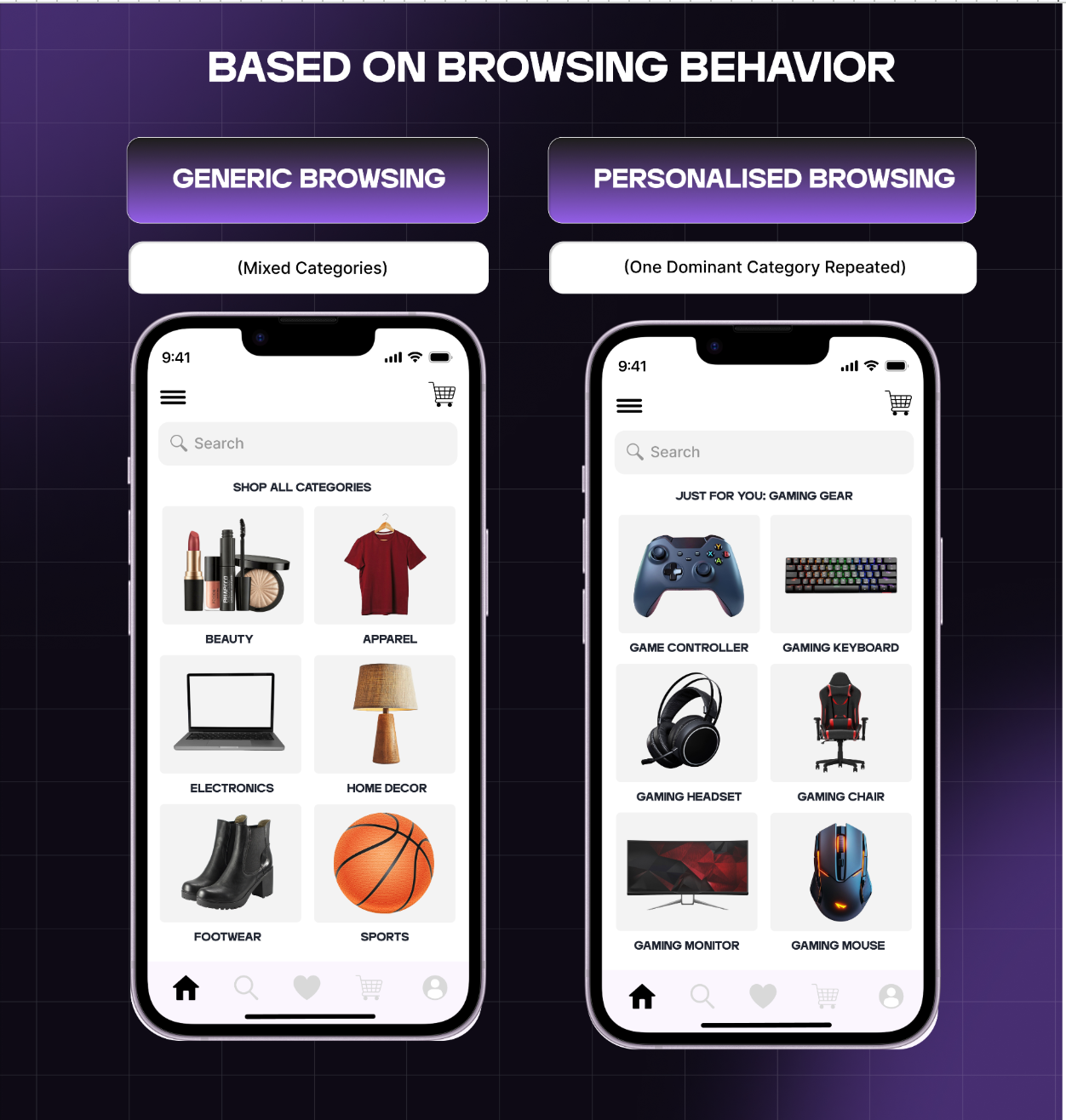
A returning customer who bought running shoes should see complementary products like socks or performance gear. Someone who browses a specific category should receive personalized email campaigns that continue that discovery.
This level of relevance comes from using customer data, like purchase history, browsing patterns, and preferences, to shape what you show next. It reduces friction because customers don’t have to search again; they pick up where they left off.
You create momentum when each interaction connects to the last one.
A customer clicks on a product from an email campaign. When they land on your site or app, they see related items and recently viewed products. If they leave, a follow-up message highlights availability or brings them back to the same context.
This continuity makes the journey feel connected. The customer doesn’t restart every time they return. Instead, they move forward from where they paused.
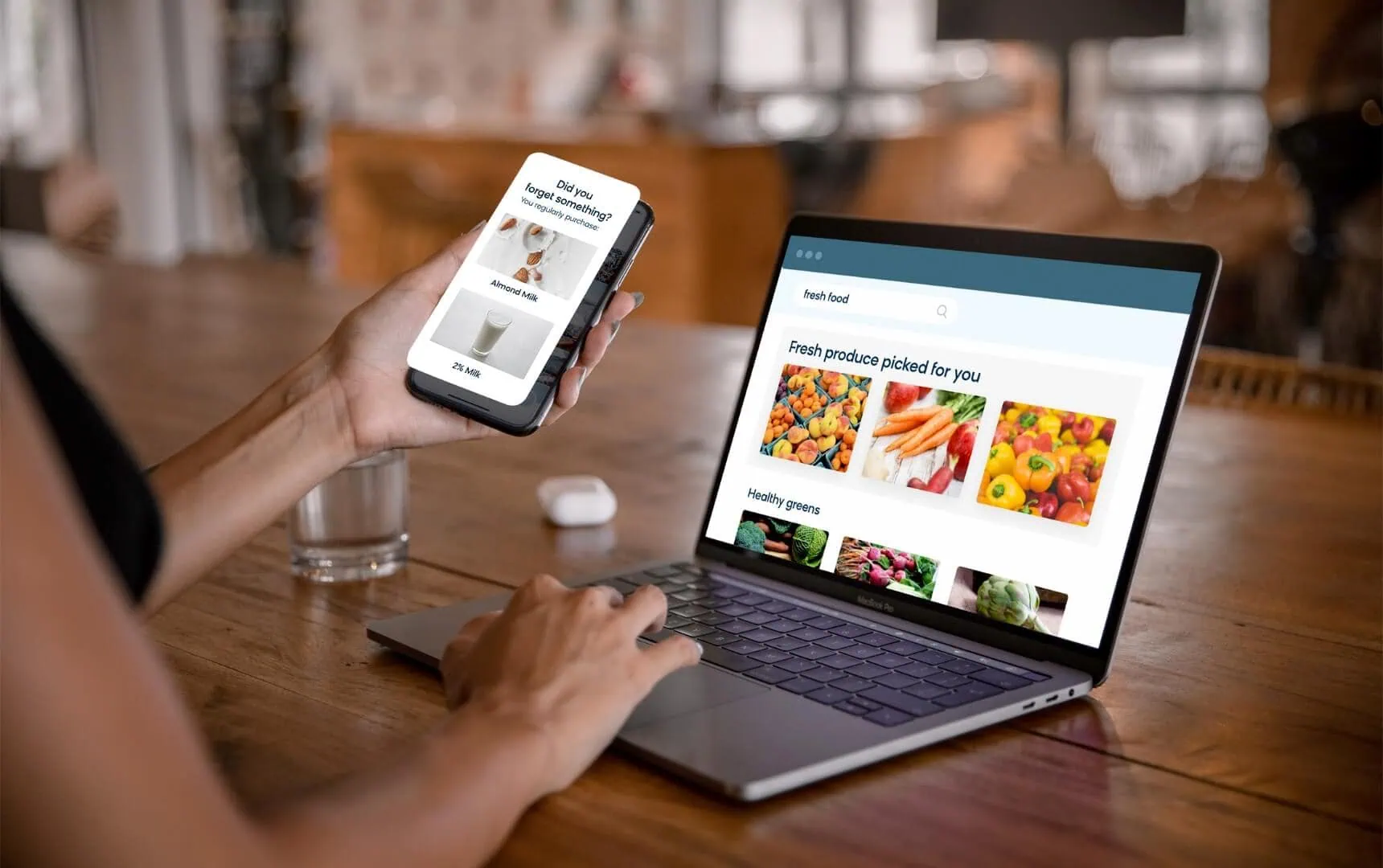
Retention grows when you actively shape the next step after the first order. Each interaction should move the customer forward, reduce effort, and make the next purchase feel like a natural continuation. Below are some strategies that help improve your business’s customer retention rate.
The first purchase gives you the clearest signal of intent. What the customer bought tells you what they need next, how soon they might return, and what will feel relevant when they do.
When you structure the post-purchase experience around this, you reduce drop-off and bring the second purchase closer.
What to implement
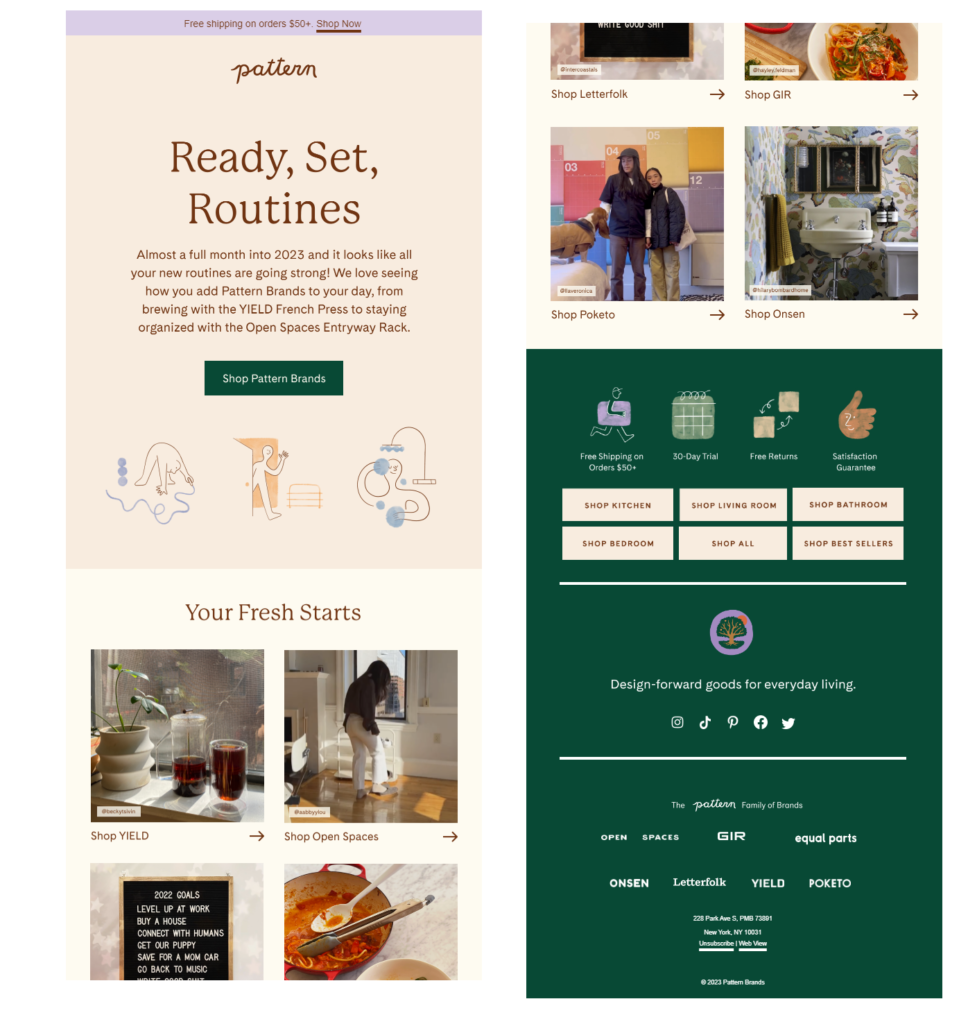
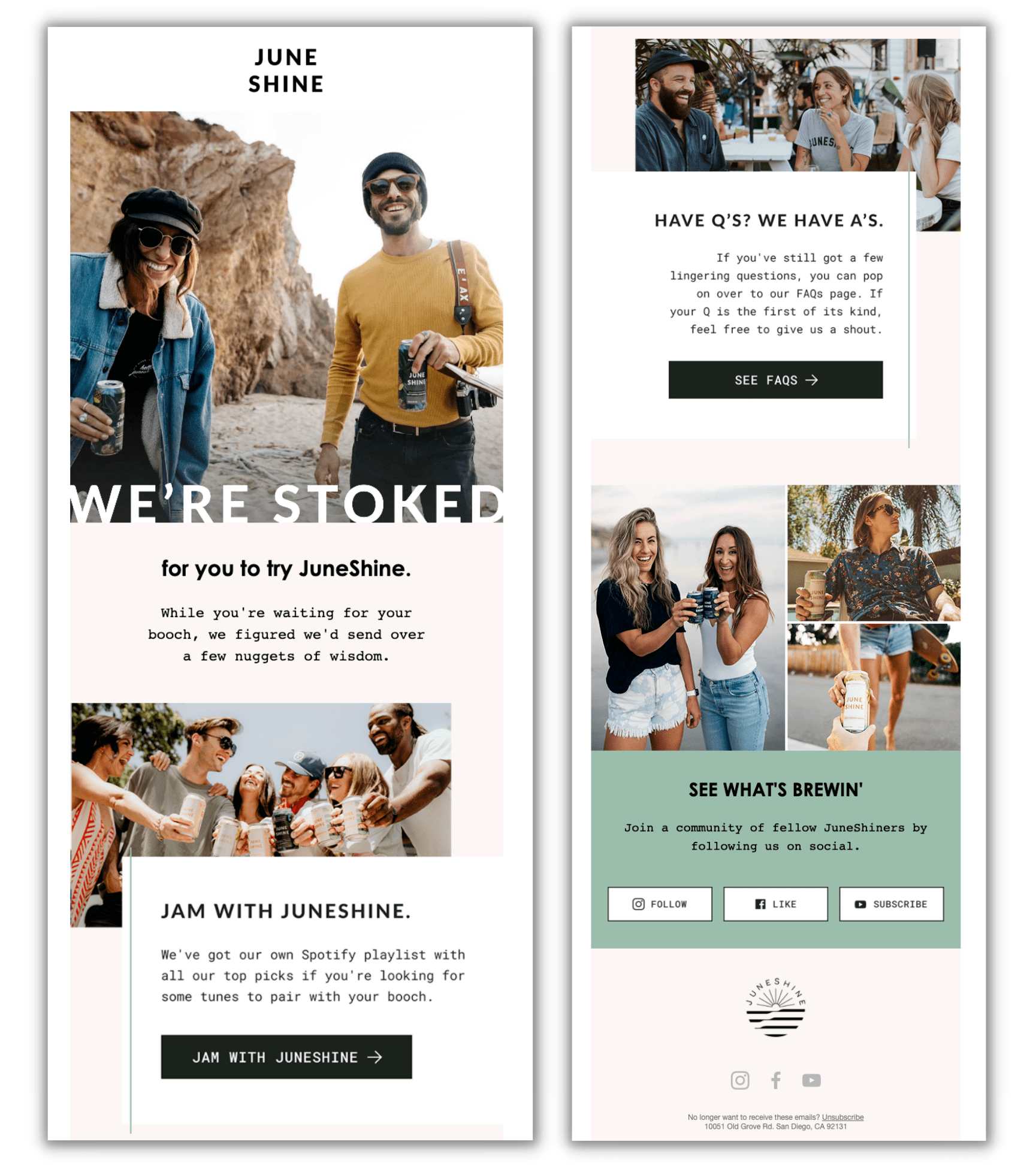
Customers don’t have to decide what to do next. The journey already points them toward it. This shortens the time between the first and second order and increases your repeat purchase rate because each step feels relevant and timely.
Push notifications give you a direct way to bring customers back when something changes or when intent is high. They work best when tied to specific events instead of fixed schedules.
This makes them especially effective for moments where timing directly affects conversion.
What to implement
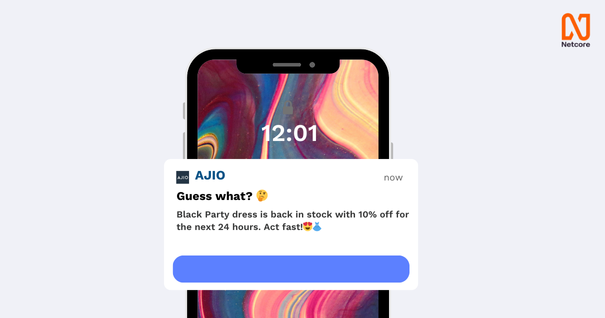
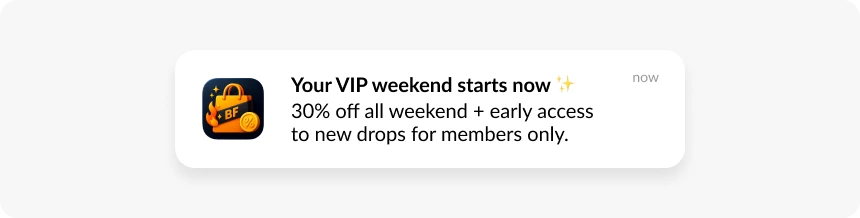
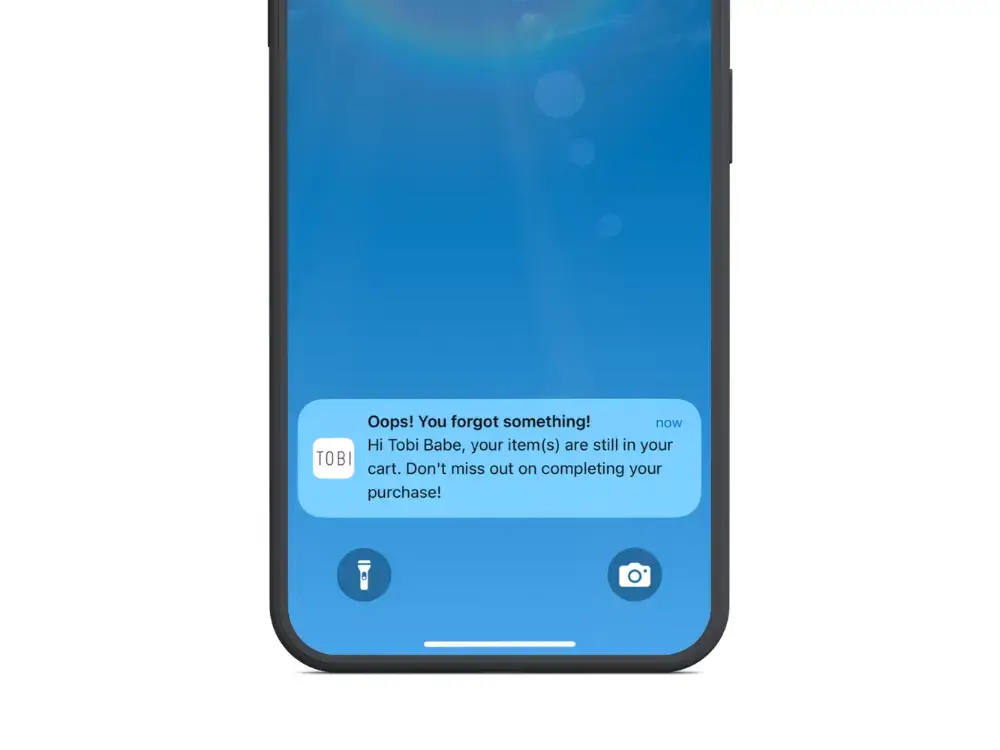
You bring customers back at the exact moment they are most likely to act. Traffic increases during high-intent windows, and conversion improves because the message matches what the customer is already considering.
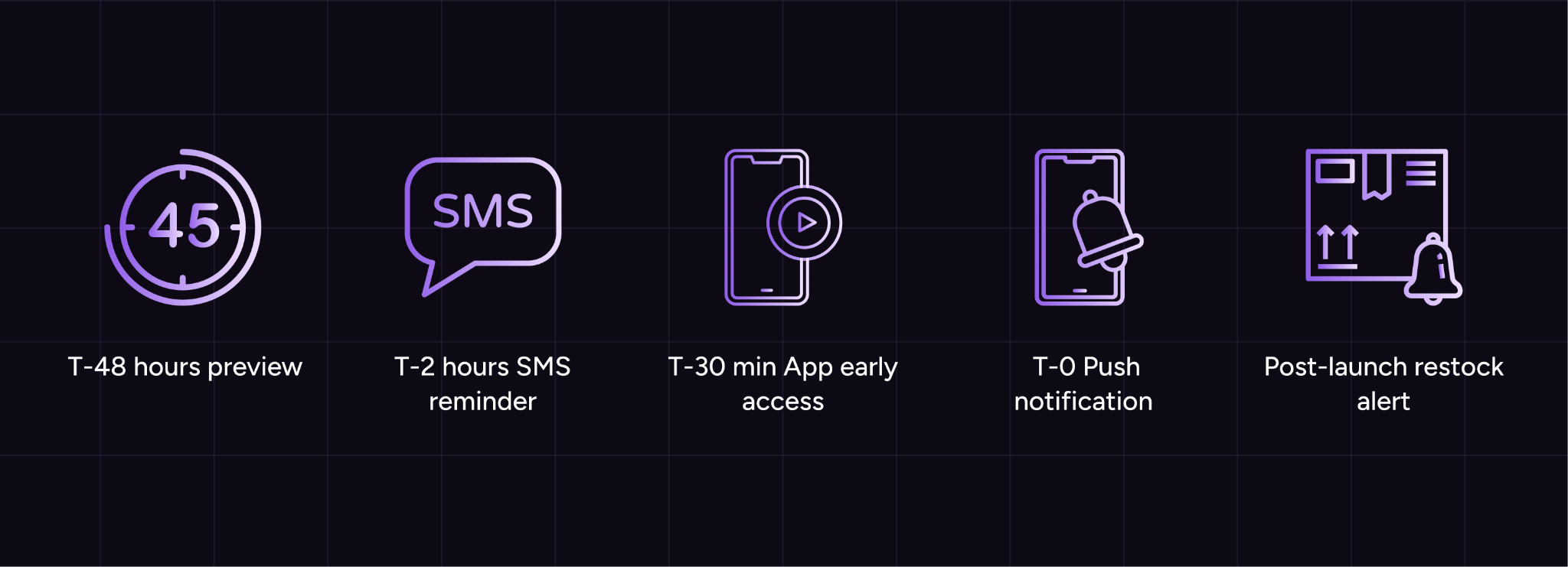
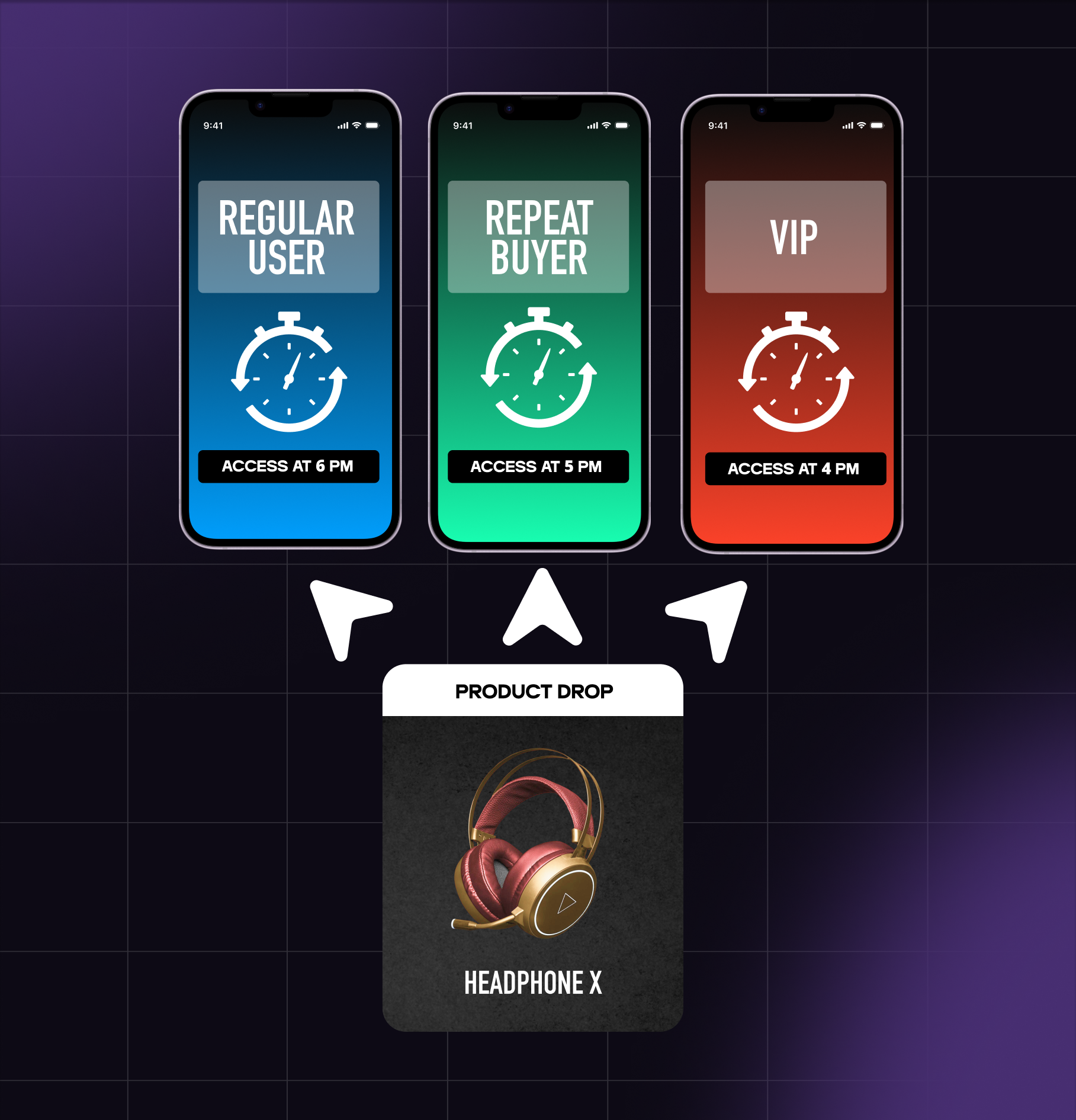
Customers return more often when they know when something is happening. Clear timing around launches, drops, and restocks gives them a reason to check in, instead of leaving the next visit to chance.
When these moments follow a pattern, they start to shape behavior. Customers begin to anticipate what’s coming next and return with intent.
What to implement
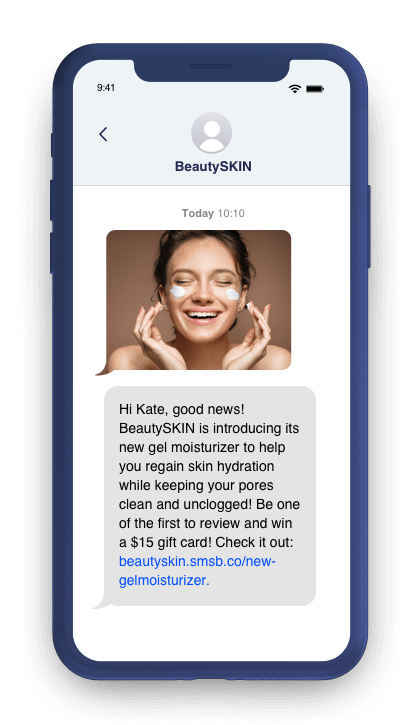
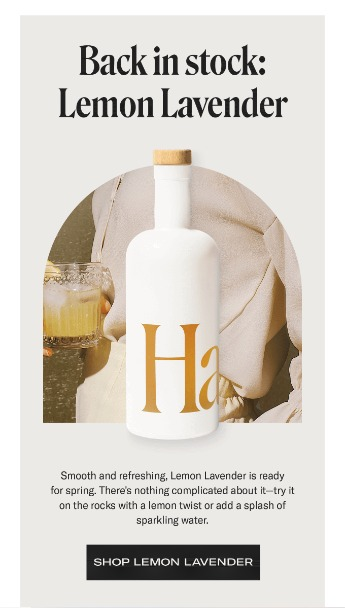
Return visits become more consistent because customers know when to come back. Over time, this builds a pattern of behavior where engagement increases, and purchases happen more frequently.
Repeat purchases happen faster when the path to buying is simple and familiar. Every extra step slows the customer down and increases the chance they will leave before completing the order.
When you remove friction, you make it easier for customers to act on intent the moment it shows up.
What to implement
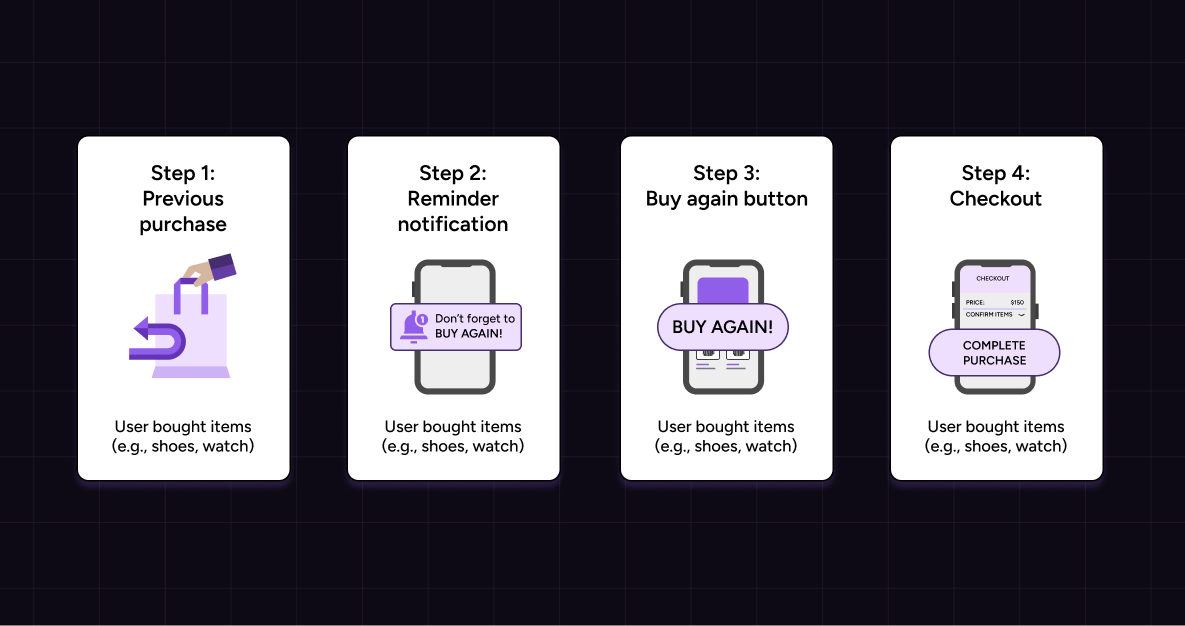
Customers move from intent to checkout with less effort. Purchase cycles shorten, and conversion rates improve because the experience supports fast, repeat decisions.
Customers engage more when the experience reflects what they have already shown interest in. Purchase history, browsing patterns, and interaction signals give you a clear direction on what to show next.
With personalized experiences, customers don’t have to search again. They continue from where they left off, which makes decisions easier and faster.
What to implement
Customers see products that match their intent as soon as they return. Engagement increases because the experience feels familiar, and conversion improves as the path to purchase becomes more direct.
Rewards or customer loyalty programs work best when they reflect how customers engage with your brand. They add structure to the experience by showing customers what they unlock as they continue to interact.
Loyalty points, tiers, and incentives give customers a reason to stay active, especially when progress is visible and tied to meaningful actions.
What to implement
Customers stay engaged because they can see their progress and understand what they gain next. This strengthens customer loyalty and increases interaction across the customer journey.
A mobile app for retention gives you a direct channel to your most engaged customers and keeps your brand within reach whenever they open their phones. It brings messaging, personalization, and the shopping experience into one place, so each interaction can build on the last without losing context.
This becomes especially valuable as your retention efforts expand across email marketing, SMS, and onsite experiences. An app helps you carry that context forward and keep the journey connected.
What to implement
Customers engage more consistently because the experience is always accessible and tailored to them. Repeat purchases happen faster, and customer lifetime value (CLV) increases as interactions become more frequent and relevant over time.
Retention improves when you focus on the next layer of impact based on your current stage. Each stage builds on the previous one, so the goal is to strengthen what’s already in place before adding more channels or complexity.
At this stage, focus on what happens immediately after the first purchase. This is where you have the highest intent and the clearest opportunity to drive the second order.
Start by setting up the core interactions that guide customers after checkout:
This creates a basic retention loop where customers receive timely communication and clear direction after their first purchase.
Once post-purchase flows are in place, expand how you reach and engage customers across channels.
Build on your existing flows by adding faster and more responsive touchpoints:
At this stage, retention becomes more consistent because customers encounter the brand across multiple connected touchpoints.
With strong foundations in place, focus on increasing engagement depth and strengthening customer relationships.
Strengthen retention by creating differentiated experiences for your most engaged customers:
This stage strengthens brand loyalty and increases customer lifetime value by making the experience more tailored, visible, and rewarding for your most engaged customers.
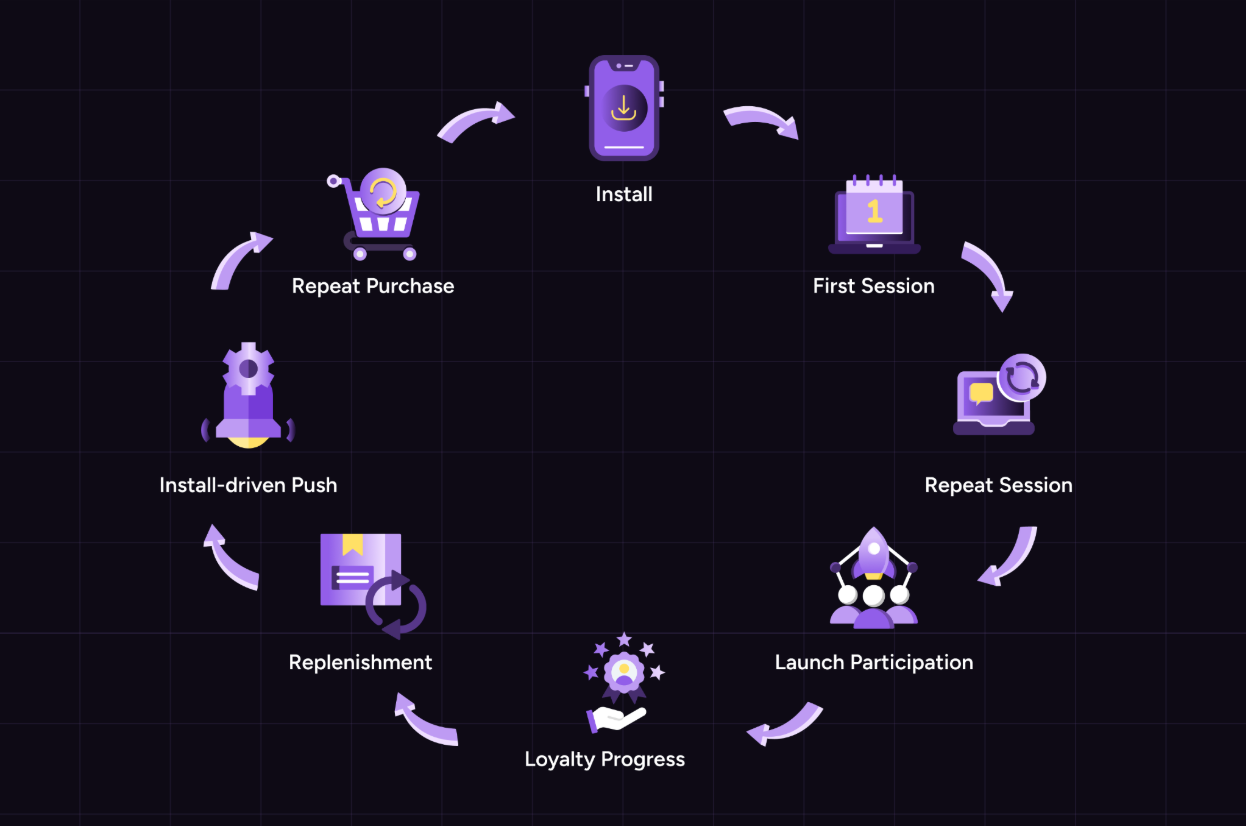
As retention efforts expand across email marketing, SMS, and onsite experiences, the journey often starts to fragment. You can trace most drop-offs back to these gaps in the customer journey:
A personalized mobile app helps you close these gaps by keeping the experience consistent and connected. With the journey in one place, you can control how customers move from one step to the next without losing context. This lets you:
Retention improves when each interaction moves the customer forward:
As these layers build, the challenge shifts from running individual tactics to keeping everything connected. This is where a mobile app becomes valuable. It gives you a direct channel to your most engaged customers and keeps communication, personalization, and the shopping experience in one place.
Platforms like Superfans.io help you turn mobile apps into a core retention channel. Brands can run push notifications tied to real-time behavior, personalize home screens based on customer data, offer VIP access and exclusive drops, and enable fast reorder flows that reduce friction. These capabilities work together to keep the journey connected and drive consistent repeat purchases.
If you want to see how this works for your Shopify store, book a demo with Superfans.io and explore how a mobile app can strengthen your retention marketing strategy.
"Looking for creative push notification ideas? Check out our free templates and start customizing!"