Hey, we’re online and here to help you anytime! You’re one step closer to building a stunning mobile app for your e-commerce store. Get on a call with us to see Vajro in action.
Hey, we’re online and here to help you anytime! You’re one step closer to building a stunning mobile app for your e-commerce store. Get on a call with us to see Vajro in action.
Not with a discount. Not with a points program. Not with the “limited-time” offers spamming your emails.
But with a decision that made you feel taken care of without asking for anything in return.
That kind of surprise lands differently. It sticks. And more importantly, it changes how you feel about choosing that brand again.
Retention doesn’t fail because of bad products. It fails because brands default to policy instead of people.
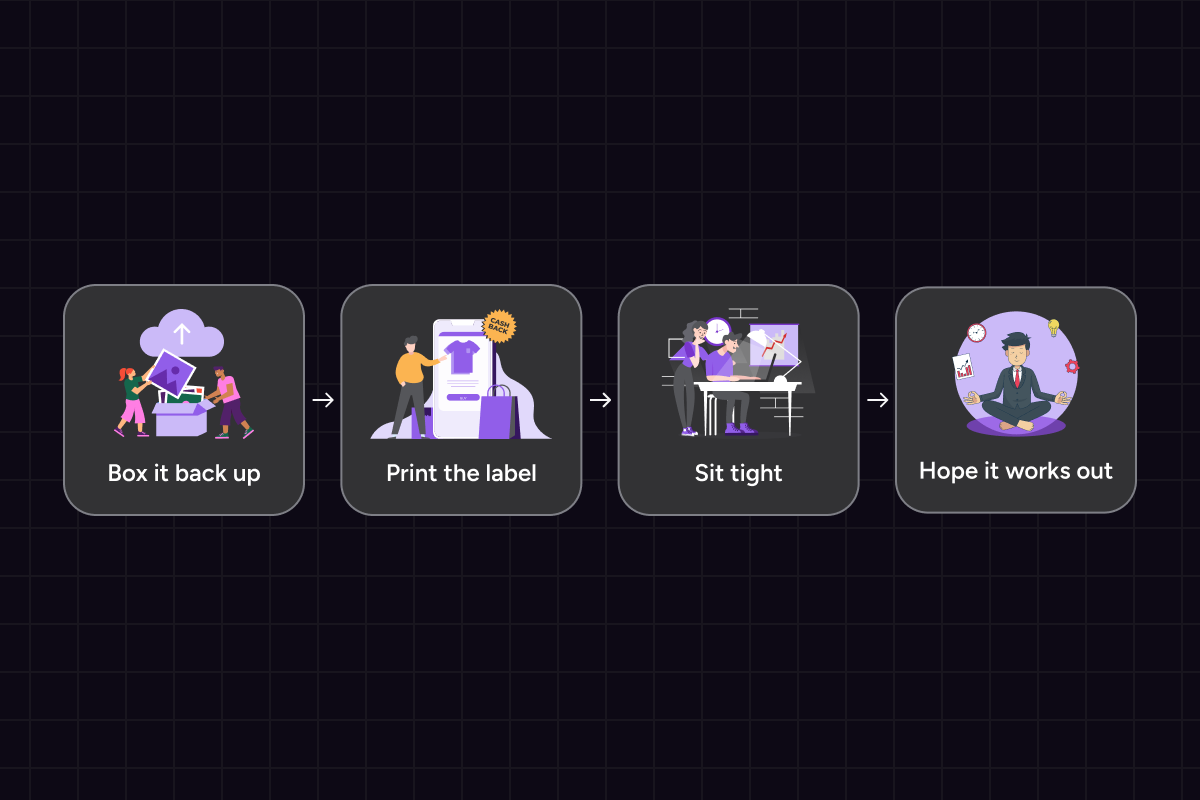
When something breaks, arrives late, or feels wrong, most brands reach for:
Return rules
Verification steps
Fraud prevention scripts
Cost-minimizing workflows
On paper, it looks responsible. In reality, it’s emotional erosion.
Bombas made a different bet.
Bombas Is More Than a Sock Company
On the surface, Bombas is a premium essentials brand.
They sell socks, lots of them. Compression socks. No-show socks. Ankle socks. Everyday basics designed to disappear into your routine.
It’s not a category that usually inspires emotional loyalty. And yet, Bombas manages to do exactly that.
They’re known for comfort and quality, yes, but what truly differentiates them is something harder to replicate. It’s generosity as an operating principle.
Bombas is mission-driven by design, famous for their one-for-one donation model. Every item purchased triggers another item donated to someone who needs it. To date, that means more than 150 million items donated.
But the number isn’t the point.
What matters is how that mindset shows up when customers reach out about :
Lost packages
Incorrect sizes
Defective socks
Bombas doesn’t ask for proof photos. They don’t demand returns. They don’t delay resolution. They reship or refund, fast.
Not because they’re reckless. But because they understand something most brands ignore:
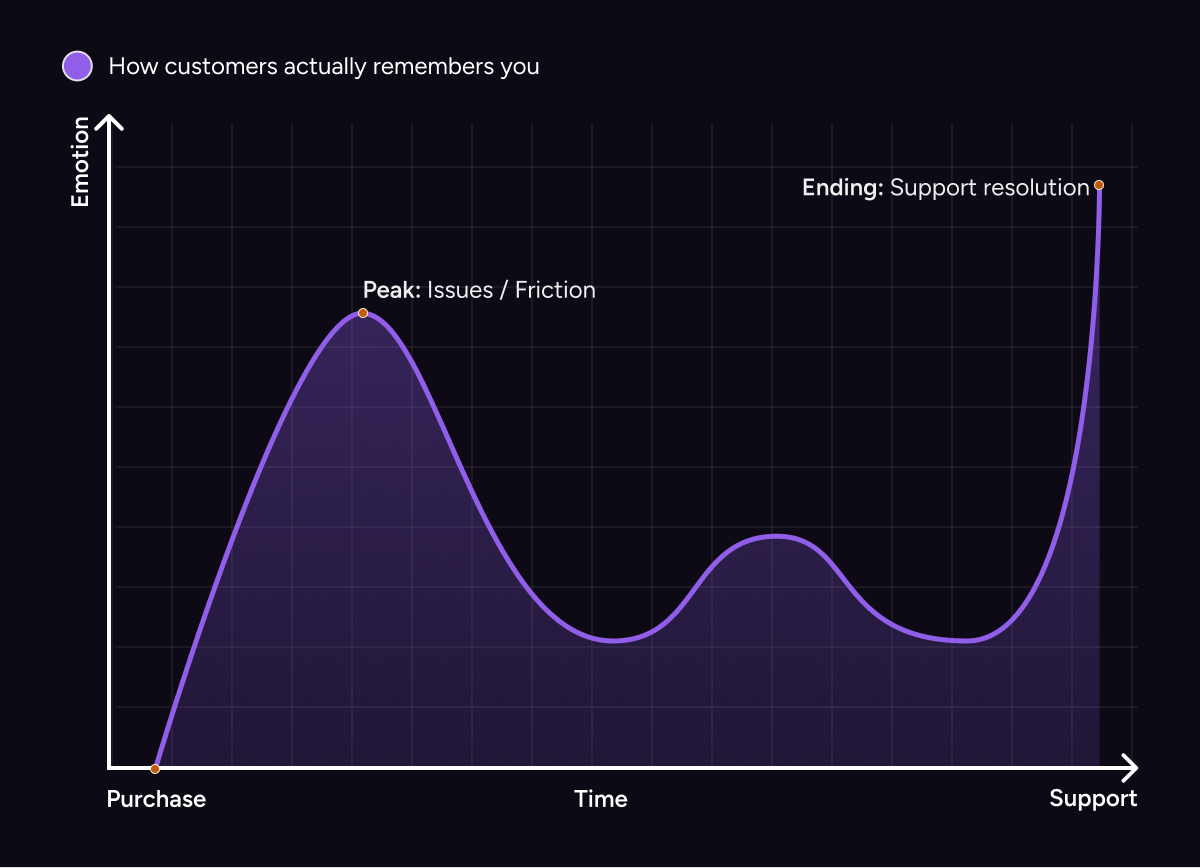
Customers don’t average experiences. They remember peaks and endings.
The Fastest Way to Loyalty Is to Remove Friction
A customer reaches out: “My socks never arrived.” This is where most brands retreat behind the process.
Not because they are malicious, but because the process feels safe. It protects margins, enforces consistency and keeps exceptions under control. Bombas does the opposite.
They ship the replacement immediately. They refund instantly. They tell the customer to keep the original pair or donate it to someone who needs it.
No friction.
At first glance, this looks like generosity.
But what’s actually happening here is much more precise.
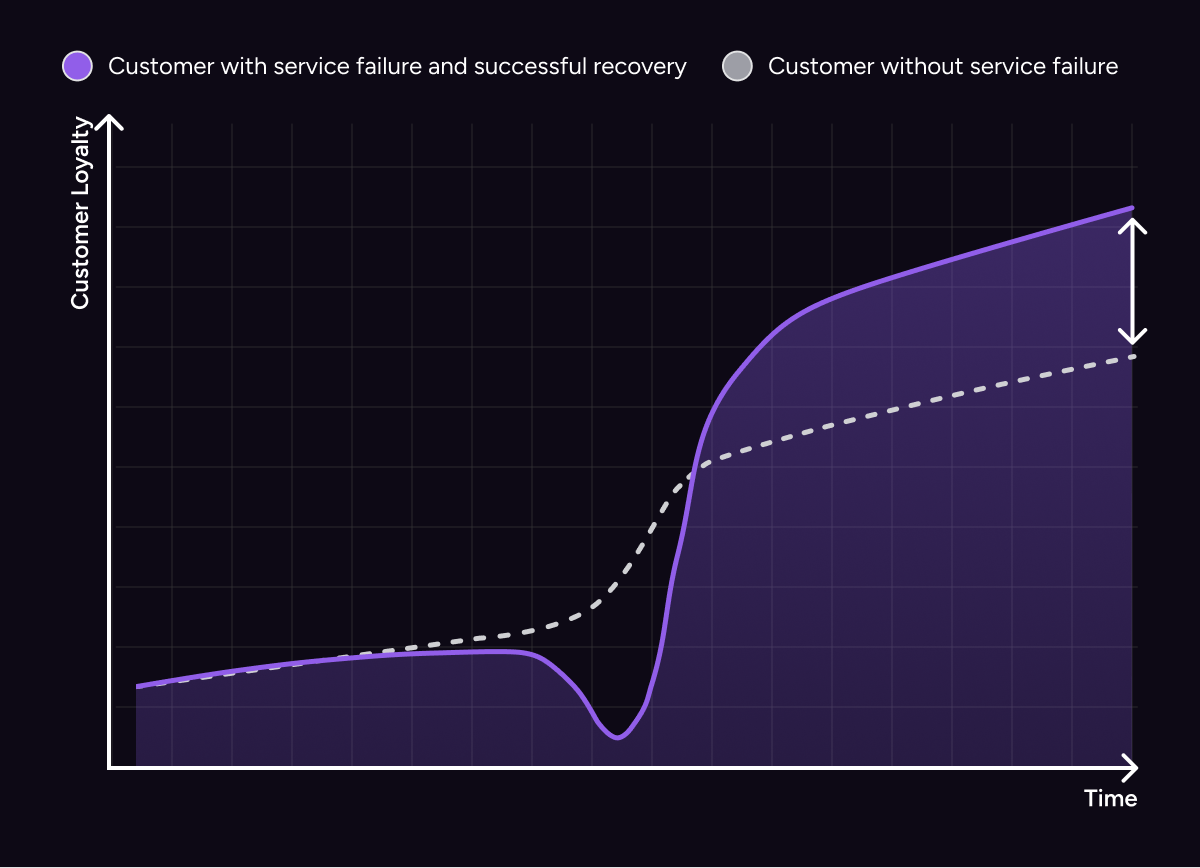
It’s called the Service Recovery Paradox.
A well-documented phenomenon in customer psychology which explains why a service failure, when followed by exceptional recovery, can create stronger loyalty than if nothing had gone wrong at all.
Why?
Because the recovery doesn’t just fix the issue. It exceeds expectations.
Customers expect resistance and get trust instead. They brace for delay and are met with speed.
That emotional contrast is the point.
Bombas don’t just solve the problem. They rewrite how the experience ends. And endings matter more than most brands realize.
Because when a brand surprises you at the exact moment you expect friction, that surprise sticks. It anchors the memory and becomes the story you tell later. Bombas consistently overcorrects. That’s what creates stories.
It’s Not About Cost. It’s About Control.
Behavioural psychology says people don’t judge experiences fairly because they don’t remember every interaction.
According to the Peak-End Rule, customers evaluate an experience almost entirely based on two moments:
the most emotionally intense moment,
The final moment.
Everything else fades.
Which means the moments that feel “small” operationally are often the moments that matter most emotionally.
Now zoom out.
A pair of socks isn’t expensive.
What is expensive?
Losing trust
Creating friction
Training customers to expect hassle
You can spend thousands acquiring a customer and lose them forever in a single support interaction. Not because the product failed, but because the experience ended poorly.
This is where retention becomes both a psychological and an economic problem.
As acquisition costs climb, retention quietly becomes the most powerful tool for growth in business. Customers don’t stay because switching is hard. They stay because choosing you feels safe. Because past experiences tell them they’ll be taken care of especially when something goes wrong.
That’s why the most expensive thing in your business isn’t generosity. It’s churn you could have prevented.
Saving a few dollars on support might look efficient but zoom out far enough and the math flips. You start seeing lost lifetime value, lost repeat purchases, and lost advocacy; the kind that no campaign can recreate.
Bombas don’t fight friction, they remove it at the exact moment frustration could take over.
Time is respected. Dignity is preserved. Trust is established.
It’s control – over the ending, over the memory and most importantly, over what the customer walks away telling themselves. And others, about the brand.
There’s always a trade-off to make.
Most brands optimize for logistics. Bombas optimizes for emotional memory. You can’t fully maximize both at the same time. One has to win
That’s how something as ordinary as socks turns into something customers never forget.
You Can’t Discount Your Way to This Kind of Trust
Customers don’t respond to experiences the way brands expect them to. They don’t behave linearly. And they definitely don’t build loyalty because a discount showed up at the right time.
Loyalty is built when experiences are designed to align with how humans actually think, feel, and remember.
When customer experiences are sequenced intentionally and emotional drivers are understood and respected — churn drops, trust compounds, and referrals happen naturally. Not because they were incentivised, but because the experience earned it.
That’s the real connection here.
Bombas isn’t winning because they’re louder. They’re not leaning on ads, algorithms, open rates, or marketplace rules to stay relevant.
They’re winning where it actually counts, in moments they fully own.
Moments where a real human reaches out, something went wrong. This is where judgment matters more than automation.
Bombas prioritizes 1:1 interactions and direct communication. They empower people to make decisions instead of hiding behind scripts or rigid systems. And they minimize dependency on walled gardens by building trust directly with their customers.
That’s not accidental, it’s behavioral design.
Because when you zoom out, loyalty follows a predictable path :
A psychological principle is activated (trust, fairness, relief) which shapes a customer action (forgiveness, repeat purchase, advocacy). This action compounds into a loyalty outcome (retention, referrals, long-term belief).
Skip the psychology, and you’re left chasing tactics. Design for it, and loyalty becomes a byproduct.
This is the same philosophy Superfans.io is built on.
Retention is strongest when you control the experience.
Not when you rent attention. Not when you chase reach.
But when you own the moment and decide exactly how it’s delivered.
Because platforms can change. Algorithms can shift. Costs can spike overnight. But owned moments compound quietly, over time.
That’s the bar Superfans exists to help brands reach: fewer tactics, more ownership, and experiences designed with intention for the customers who matter most.
Not loud marketing. Better moments.
That’s how trust is built and loyalty is made to last.
Generosity as a System, Not a Campaign
Most brands don’t fail at retention because they don’t care. They fail because care isn’t built into the system.
On the surface, everything looks right. The values sound good. The mission statement exists. The team genuinely wants customers to be happy.
But then reality hits.
Support teams aren’t empowered to act. Exceptions require multiple approvals. Policies exist to protect efficiency, not loyalty.
So when something goes wrong, the system takes over. The one designed to minimize cost, reduce variance, and move tickets along, not to build trust.
That’s how good intentions quietly turn into bad experiences.
Bombas flips the model.
They invest in treating edge cases as opportunities to get to know their customers, not costs. That’s a choice.
Retention Isn’t a Feature. It’s Behaviour.
Retention doesn’t come from a single tactic or feature. It emerges from a chain reaction.
A brand choice creates a feeling. That feeling shapes behavior. That behavior compounds into loyalty, or churn.
Every time.
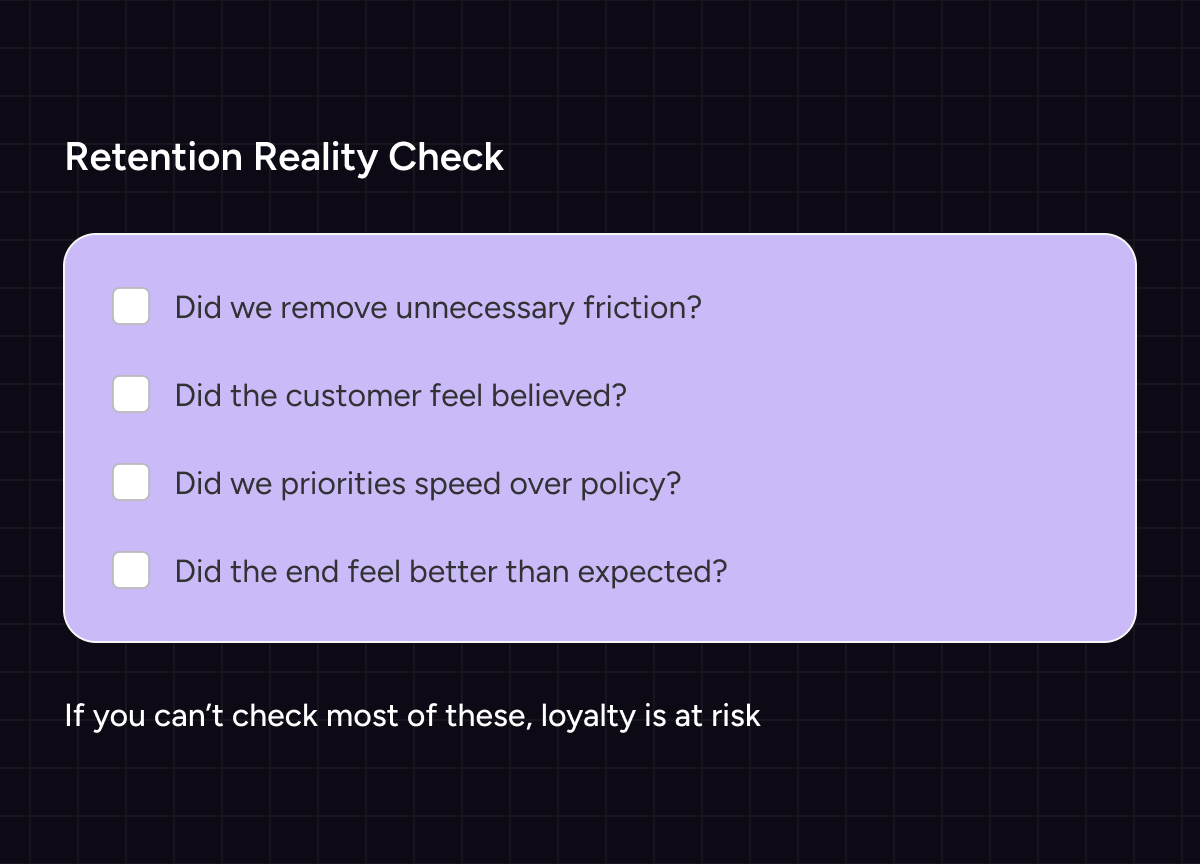
The question isn’t whether this is happening in your business. It’s whether you’re designing for it on purpose.
Here’s a simple way to check.
Small Moments Compound Faster Than Grand Gestures
Retention isn’t engineered at the end of the funnel. It’s designed upstream, one decision at a time.
There’s strong academic evidence behind this. Research on service recovery consistently shows that when brands handle failures well, customers don’t just forgive them, they often become more loyal than if nothing had gone wrong at all. Not because the mistake was good, but because the response reshaped how the customer felt about the brand.
The takeaway is simple: loyalty isn’t the absence of problems. It’s the presence of thoughtful recovery.
Bombas understands this instinctively.
They’re well known for their one-for-one donation model, but that’s only the most visible expression of a deeper philosophy. The real work happens earlier, in how decisions are made, and how those decisions are designed to land emotionally. They don’t just ask, “Is this efficient?” They ask, “How will this feel?” and then trust the behavior to follow.
These moments never show up in dashboards. They don’t scale through ads, neither do theyt fit neatly into funnels or attribution models.
But they do something better.
They create stories.
Stories customers tell their friends. That stays long after the transaction is forgotten.
And once a customer has a story like that, the brand stops being interchangeable.
You can’t buy those stories. You can’t manufacture them with campaigns.
You have to earn them one decision, one moment, one interaction at a time.
That’s what Bombas gets right. And that’s where real retention is built.
Socks Don’t Usually Come With a Story. But These Do.
Socks are functional, interchangeable, easy to replace. Almost forgettable.
Yet, Bombas has managed to turn something ordinary into something people remember.
Not through grand gestures.
Through quiet, human decisions made consistently, even when no one is watching.
Decisions to trust instead of doubt, to remove friction instead of enforcing it, to treat customers like people, not tickets in a system.
That’s what makes retention real. It’s what makes brands unforgettable in categories where they shouldn’t be, turning repeat purchases into belief. Belief in loyalty that compounds over time.
Most products disappear the moment they’re used. Moments like these linger.
They show up in stories customers tell their friends and in recommendations made without incentives.
That’s the power of doing the right thing when it would be easier not to.
And that’s how a simple pair of socks becomes something more; a moment someone never forgets.
Thank you! Your submission has been received!
Oops! Something went wrong while submitting the form.
This is some text inside of a div block.
"Looking for creative push notification ideas? Check out our free templates and start customizing!"







.png)
.png)


.png)