Hey, we’re online and here to help you anytime! You’re one step closer to building a stunning mobile app for your e-commerce store. Get on a call with us to see Vajro in action.
Hey, we’re online and here to help you anytime! You’re one step closer to building a stunning mobile app for your e-commerce store. Get on a call with us to see Vajro in action.
Launching a mobile app doesn’t guarantee installs. Customers won't download it unless the incentive is immediate and obvious, and without a deliberate plan, even a well-built app gets ignored.
Brands that drive real adoption don't leave installs to chance. They anchor app nudges to high-intent moments (product launches, reward milestones, replenishment windows, early access drops) and surface the app when customers are already primed to act.
The right marketing strategies make app promotion a focused and ongoing effort, allowing you to deliver the right message, target the right customers, and activate them when they’re most likely to respond.
This guide breaks down how ecommerce brands can drive app installs intentionally, align promotion with customer behaviour, and turn adoption into durable, long-term retention.
Before you start promoting your app
Before you start promoting your app, the foundation needs to be in place. You may have distribution channels ready and campaigns lined up but without a clear install value proposition, a defined target cohort, high-intent touchpoints, and a first experience that delivers on the promise, none of it converts the way it should.
Here's everything you need to set up before promotion begins:
Start with a clear install value proposition
An install value proposition explains why someone should become an app user instead of remaining a web visitor. Customers download when the benefit is immediate and specific:
App-only access to launches or restocks
Faster checkout with saved preferences and payment details
Loyalty visibility, rewards tracking, and tier progress
Early access windows or reserved inventory
This value proposition anchors every install nudge you run. Without it, promotion defaults to generic "download our app" messaging, which gives customers no reason to act.
To define yours, audit the gap between your mobile site and your app experience. Identify where your highest-value customers already engage most (like repeat purchases, loyalty check-ins, launch browsing) and ask what the app makes faster, more exclusive, or more rewarding.
Then pressure-test it. Can you articulate the benefit in a single line of CTA copy? If not, the proposition isn't sharp enough yet.
For example, a skincare brand with a strong replenishment cycle might say: "Reorder in one tap, earn double points, and get 24-hour early access to new drops."
That's specific, benefit-led, and gives three distinct reasons to install— each tied to a behaviour the customer already has.
Define who should install first
Not every customer should be targeted equally. The strongest mobile app marketing strategies begin with segmentation. Identify which group gains the most value from installing:
Repeat purchasers already have a replenishment rhythm, saved preferences, and order history. The app makes reordering faster and surfaces personalized recommendations based on past behavior. For this group, friction reduction is the hook.
High-value cohorts respond to exclusivity, like early access windows, VIP drops, and reserved inventory. The app becomes the channel where they get first access, not an afterthought.
Loyalty members are already engaged with your program, but most brands make them log into a web portal to check points or tier status. The app brings that visibility forward (real-time progress, reward reminders, milestone notifications) and keeps the program top of mind.
This turns app installs into a lifecycle step rather than a broad user acquisition push. When install prompts reflect where a customer already is in their journey, conversion rates improve and post-install retention holds.
Surface the install value at high-intent moments
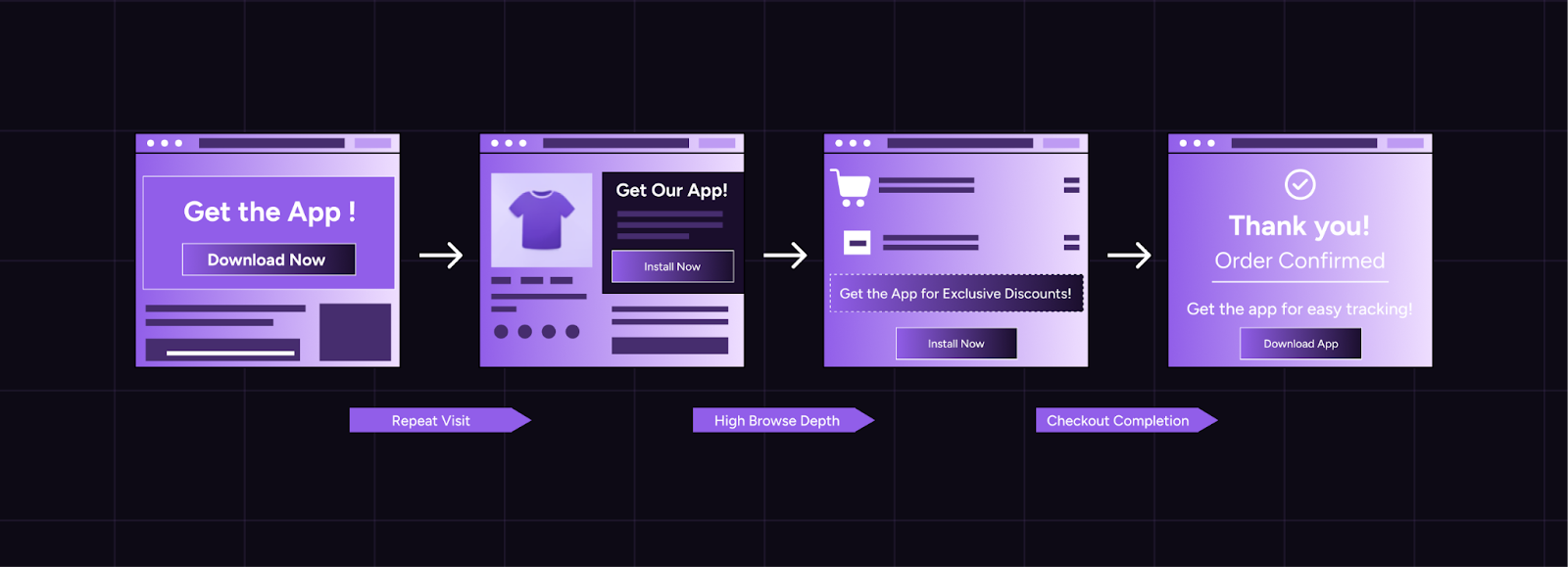
A strong value proposition only works if it's delivered when customers are primed to act. High-intent moments—when someone is already engaged, browsing, or transacting—are where installs convert.
Product pages for high-demand or frequently sold-out items.
Cart flows that highlight saved details, faster checkout, and loyalty benefits.
Post-purchase confirmation pages introducing app-based order tracking and push notifications.
These placements align promotion with existing traffic patterns. You avoid interrupting shoppers and instead, offer them a better version of what they want to engage with.
Build your first impression with precision
The first impression after install should deliver on the promise that brought the install. If a customer installed because of early access to a launch, the home screen should surface that launch immediately. If they came for loyalty visibility, show their points balance and next reward on entry.
When the first experience reflects the install context, customers understand the app's value instantly. That alignment increases session depth, strengthens retention, and reduces same-day uninstalls.
It also ensures your mobile app marketing efforts translate into growth for your brand— higher install-to-active-user rates, faster time-to-second-purchase, and measurable lift in LTV.
A strong install value proposition only works if the app experience validates it. Define the value first, then promote it across your owned channels and high-intent touchpoints, and then deliver on the value you promised as soon as the shopper opens your app for the first time.
Top marketing strategies to increase mobile app adoption
Once the foundation is set (value proposition defined, target cohorts identified, high-intent touchpoints mapped), execution becomes tactical.
The strategies below focus on converting existing customer behaviors into app installs, using owned channels, lifecycle triggers, and moments where intent is already high.
1. Use post-purchase moments to drive installs
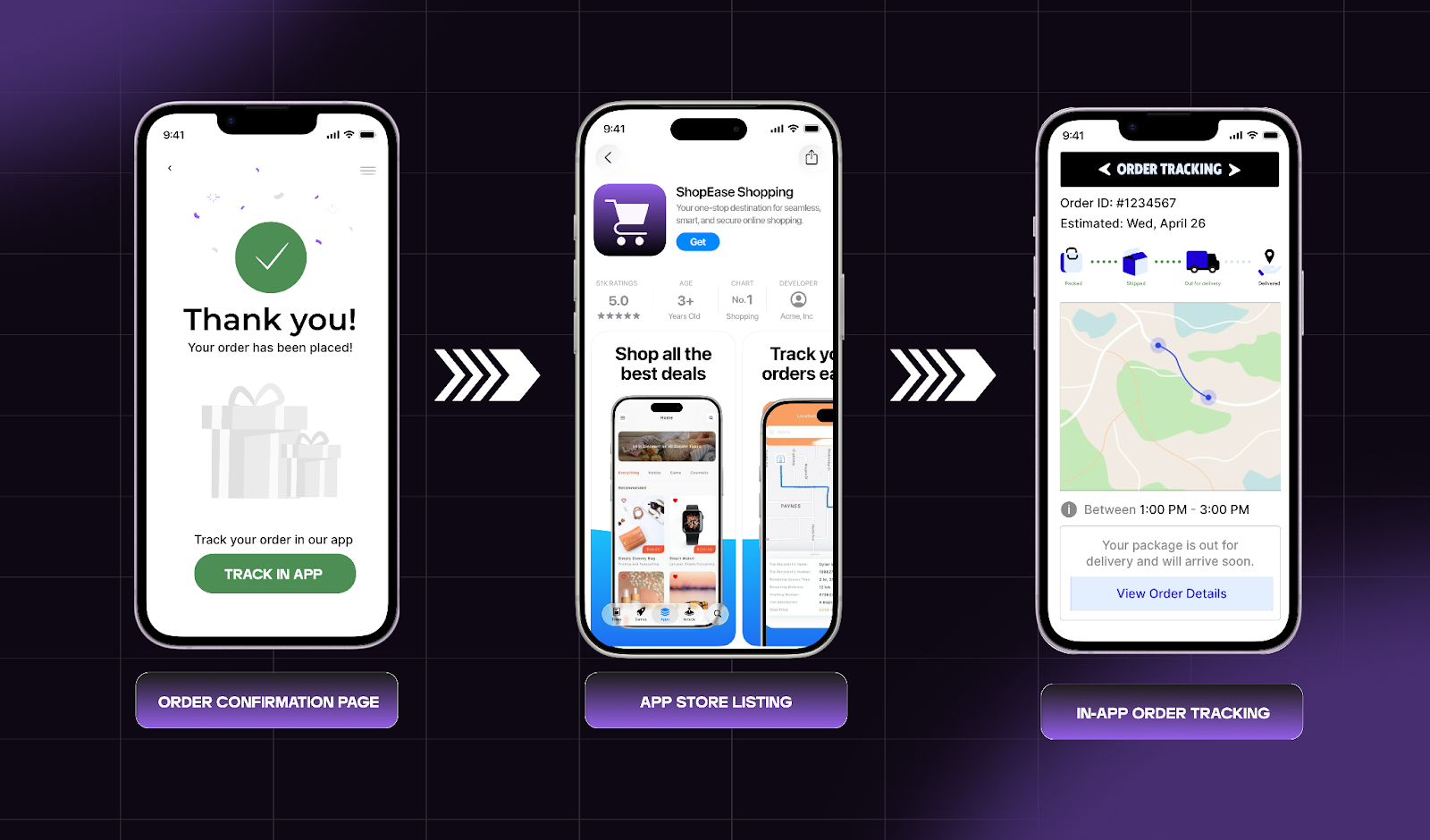
The post-purchase window is one of the highest-converting moments for app installs. The customer has completed payment, confirmed intent, and is actively monitoring their order status.
Use that window to position the app as the fastest way to track, manage, and reorder:
Add a persistent app install banner on the order confirmation page that references the exact order placed. Example: “Track Order #4821 in real-time inside the app.”
Embed smart deep links that take the customer directly to the install screen in the App Store and then back into the order-tracking view after install.
Offer app-based shipping and delivery tracking with milestone-based push notifications such as “Packed,” “Shipped,” and “Out for delivery.”
Include the app install link within the confirmation email and SMS with a clear CTA tied to tracking and updates.
Display estimated delivery date, shipment status, and a reorder button immediately when the shopper first opens your app to reinforce continuity.
Pre-fill the customer’s saved address, payment method, and preferences inside the app to reduce friction for the second purchase.
Trigger a follow-up push notification 5–7 days after delivery, prompting reorder, review submission, or related product discovery.
Executed properly, this approach converts first-time buyers into app users within the same transaction cycle. That transition increases active users early in the lifecycle, strengthens retention, and improves the probability of a second purchase within the first 30–60 days.
2. Activate high-intent customers first
App adoption accelerates when you start with customers who already demonstrate commitment. Target buyers who purchase repeatedly, engage with lifecycle messaging, and respond to launches since they generate stronger install-to-active-user ratios than cold acquisition ever will.
Focus on these segments first:
Repeat purchasers with two or more completed orders in the last 90–180 days.
Email and SMS engagers who consistently open, click, or convert from lifecycle flows.
Early launch participants who join drops within the first hours of release.
Loyalty members with visible points balances or tier status.
These groups already contribute to your lifetime value. When they install, they're more likely to stay active, respond to push notifications, and convert again quickly.
Once you've identified the segments, execute with precision:
Create segment-specific campaigns within your email marketing and SMS flows, inviting installation with a defined benefit such as early access, faster reordering, or exclusive previews.
Personalize the message based on user behavior. For example, highlight replenishment reminders for frequent buyers or VIP previews for high spenders.
Use social proof in targeted messaging by referencing participation rates in past launches or exclusive member-only drops.
Align landing page messaging with the segment’s motivation so the CTA reinforces progression rather than promotion.
When you treat app installs as a progression step in your lifecycle, you increase retention rates and reduce churn among your highest-value cohorts. This approach improves conversion rates inside the app and supports measurable growth in LTV without expanding ad spend or broadening your target audience prematurely.
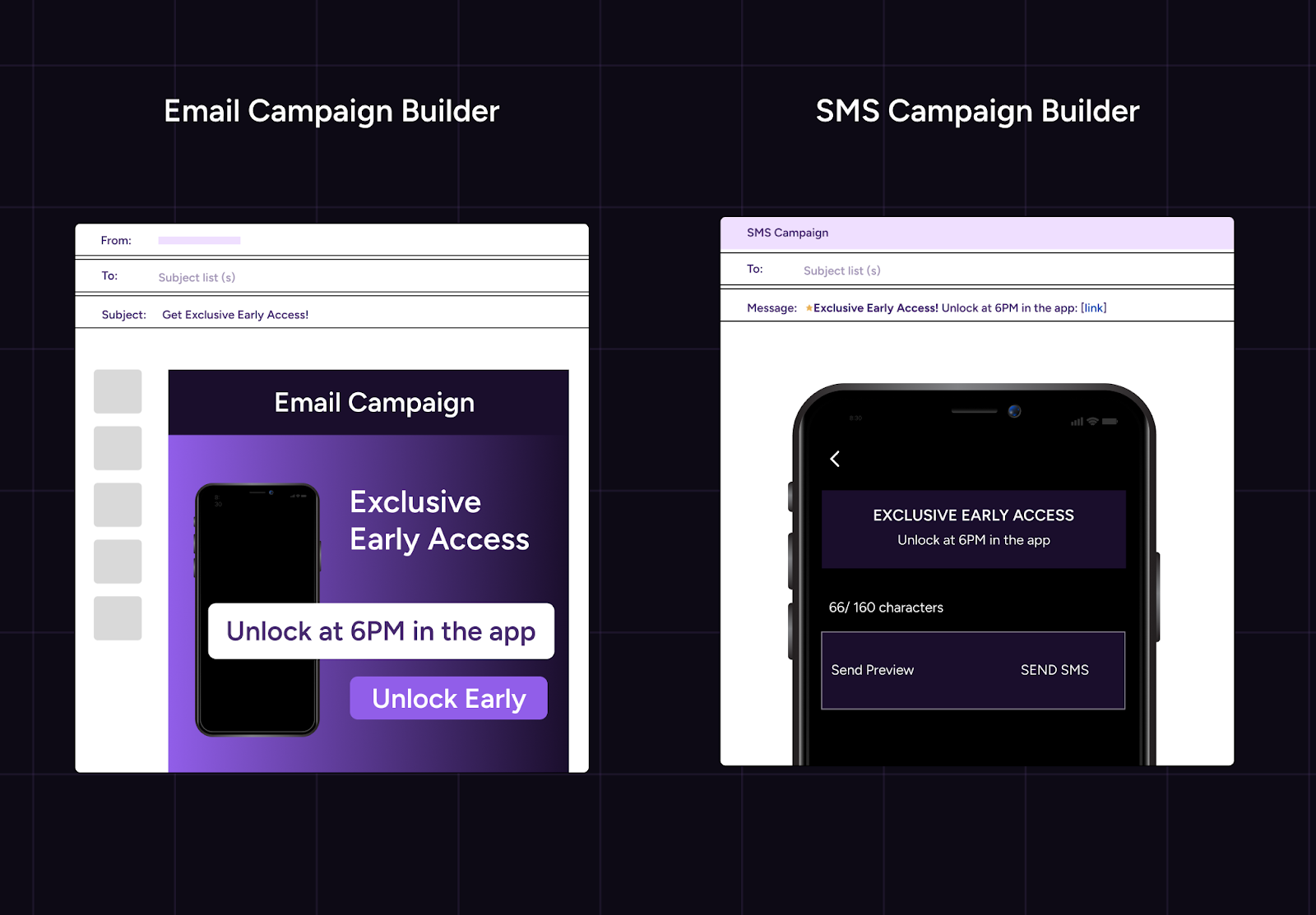
3. Promote app installs through email and SMS
Email marketing and SMS give you controlled reach across engaged segments. Use them to drive app installs at moments tied to behaviour, revenue events, and customer progression.
Anchor each marketing campaign to a specific trigger and outcome.
Start with customers who have demonstrated engagement in the last 30–90 days. This includes repeat purchasers, high click-through segments, loyalty members approaching a reward threshold, and customers who participated in previous launches.
Execute with clear lifecycle logic:
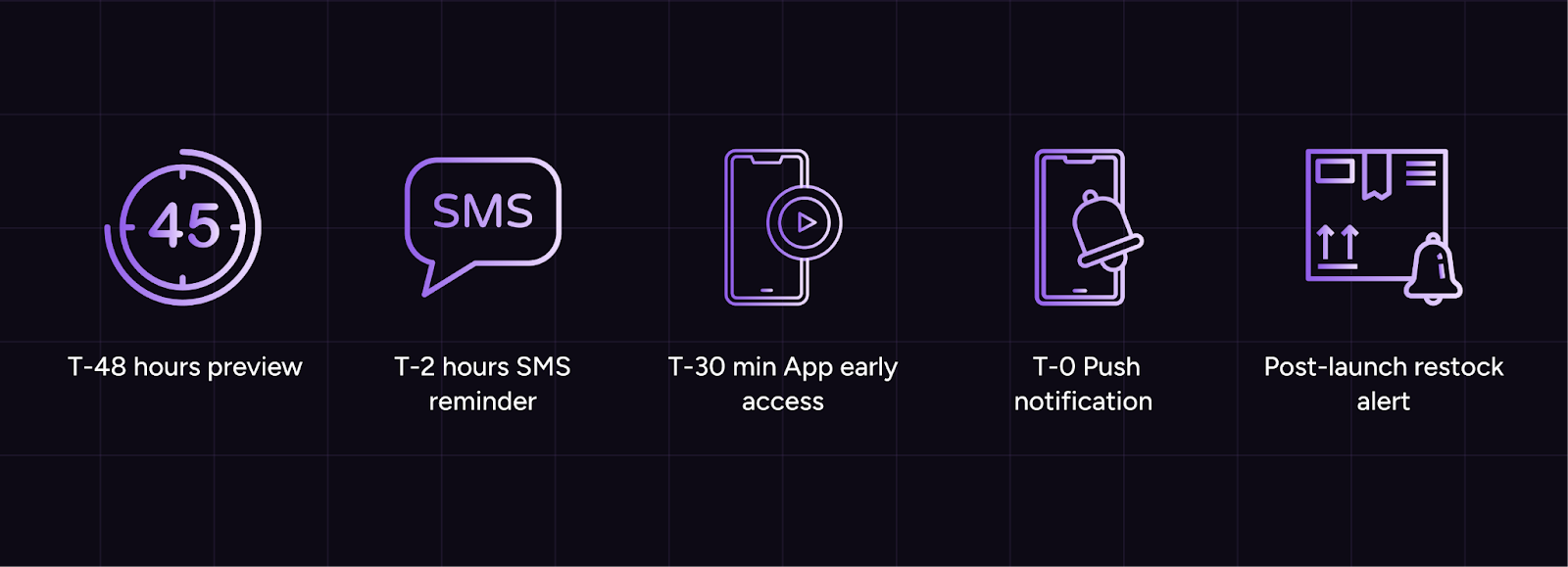
Trigger an install campaign 7–14 days before a major launch and position the app as the access layer for early entry, countdown alerts, and gated collections.
Send a loyalty-based email when a customer crosses a points milestone. Highlight real-time reward tracking and tier visibility inside the app.
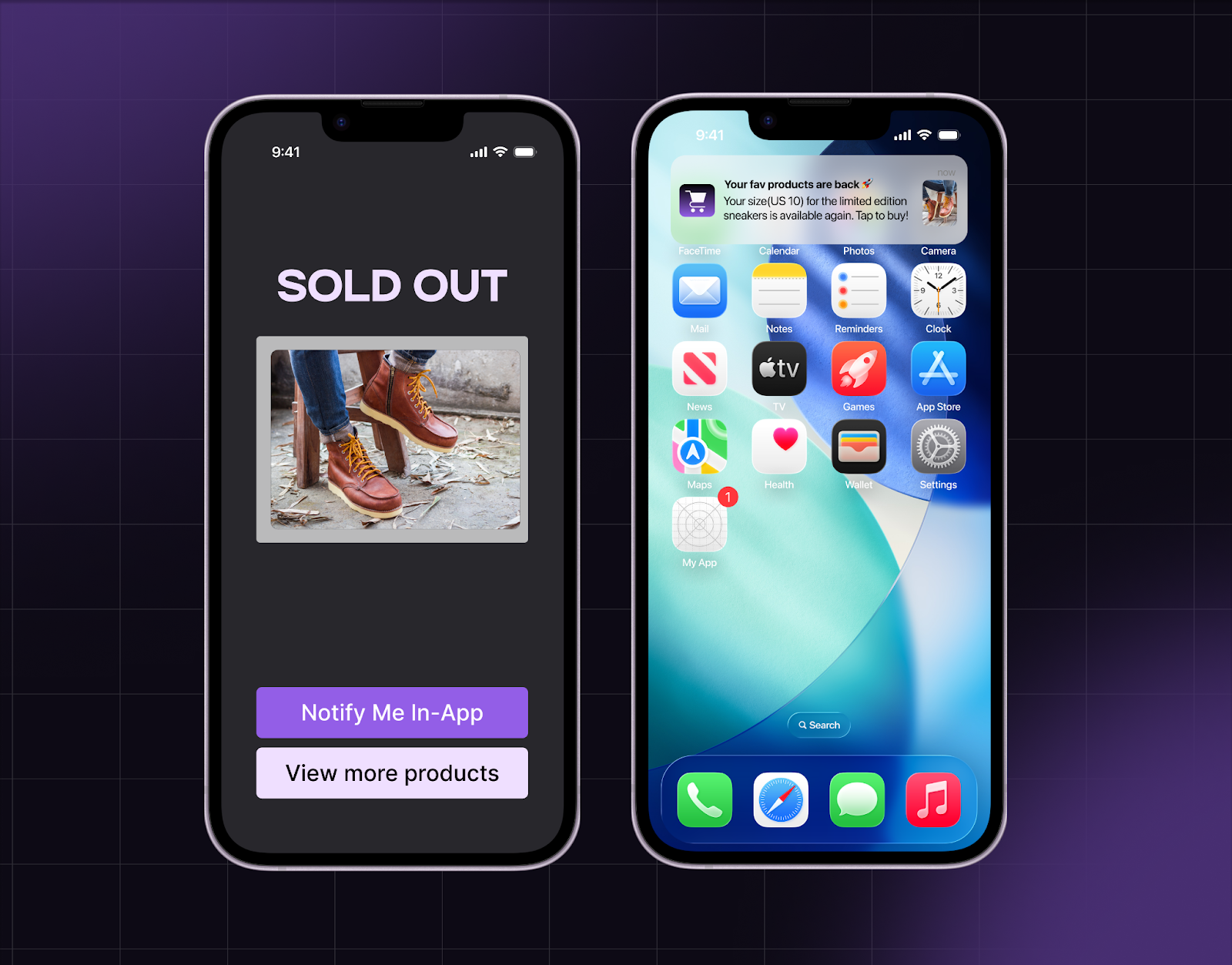
Follow up on high-intent browse or back-in-stock activity with an SMS that links directly to the app store listing and the relevant product collection.
Build a short onboarding sequence for new app users that reinforces the original reason they installed, such as launch access, order tracking, or faster checkout.
Align the message across every touchpoint. The email subject line, SMS copy, landing page, app store optimization assets, and screenshots should communicate the same value proposition.
Bonus tip: Use direct, outcome-driven CTAs, like:
“Access the drop at 6 PM inside the app.”
“Track your order in real-time.”
“View your rewards balance instantly.”
When you tie email and SMS to lifecycle triggers instead of broad announcements, you increase install-to-first-session rates, strengthen retention, and grow lifetime value among high-intent segments.
4. Use your website as a primary app acquisition channel
Your website already captures qualified traffic across your marketing channels. Visitors arrive through SEO, paid ads, social media, influencer marketing, and search engine discovery with defined intent. When you treat that traffic as part of your mobile app marketing system, installs become a natural progression within the shopping journey.
Adoption increases when the install prompt reflects behavior.
A first-time browser exploring one product behaves differently from a returning customer who has viewed five products in the same category within seven days. A repeat purchaser entering checkout shows stronger purchase intent than a casual visitor scrolling the homepage.
When you align install messaging with these signals, conversion rates improve, and install-to-first-session performance strengthens.
Here’s how to structure it:
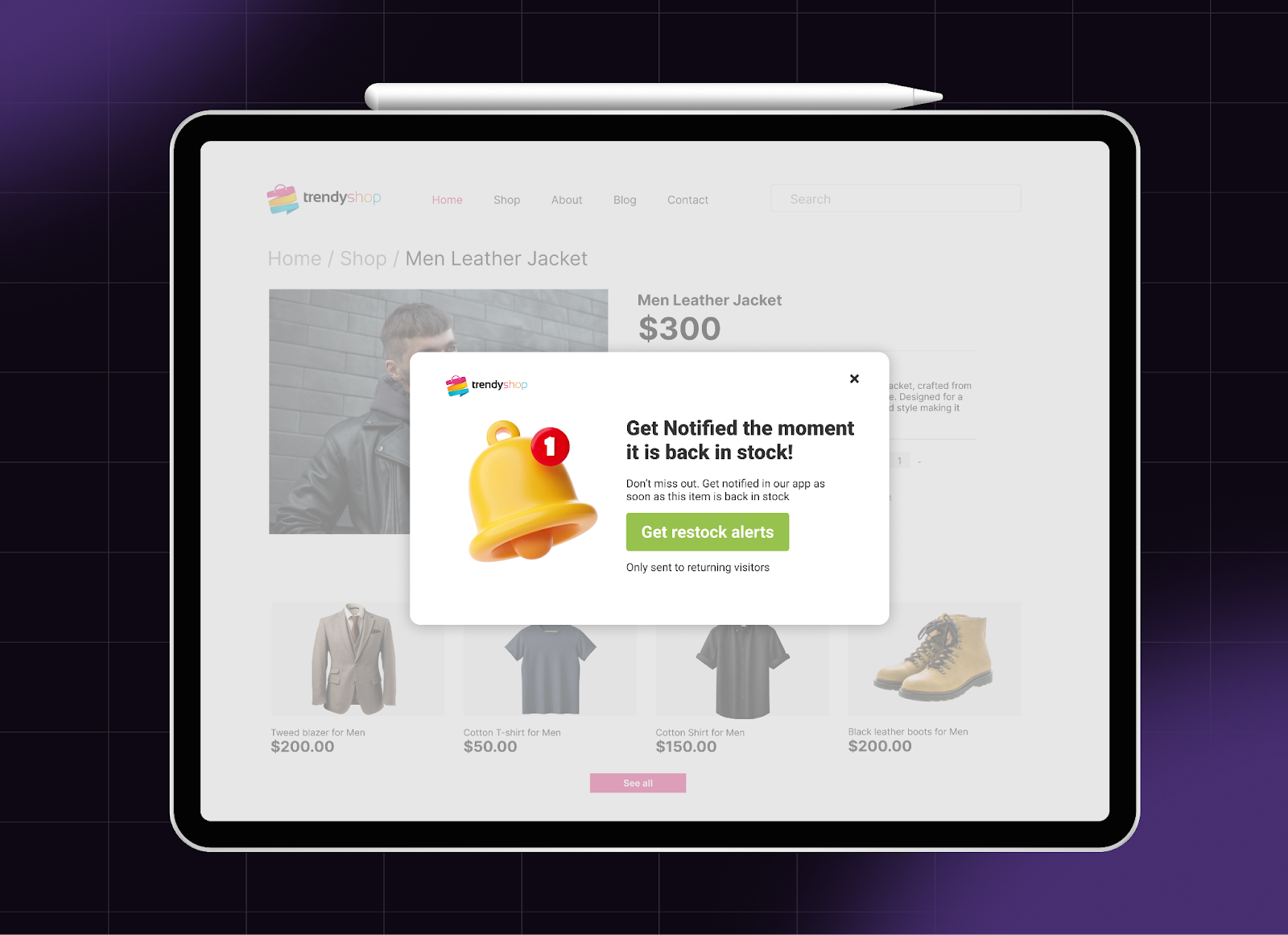
Trigger exit-intent prompts only for repeat visitors or high-browse sessions. Connect the message to early access or restock alerts.
Embed contextual install modules on high-demand product and category pages tied to launches or limited inventory.
Reinforce installation during cart or checkout for returning shoppers by highlighting faster reordering, saved preferences, and in-app order tracking.
Build a dedicated landing page that explains the app's functionality and loyalty access. Align its messaging, screenshots, and positioning with your app store listing to strengthen ASO performance across iOS and Google Play.
This structure ensures the app appears at moments where it enhances the purchase experience. You are extending intent, not interrupting it.
When you integrate website behavior into your mobile app marketing strategies, you convert existing demand into sustained retention. That shift increases active users, strengthens lifetime value, and drives durable app growth.
5. Incentivise installs without relying on discounts
The incentive you choose influences the type of app user you attract. When you lead with percentage discounts, you train customers to respond to price triggers. When you lead with access, visibility, and convenience, you build sustained engagement and stronger retention.
Design incentives that reinforce long-term behavior. Focus on value that compounds over time:
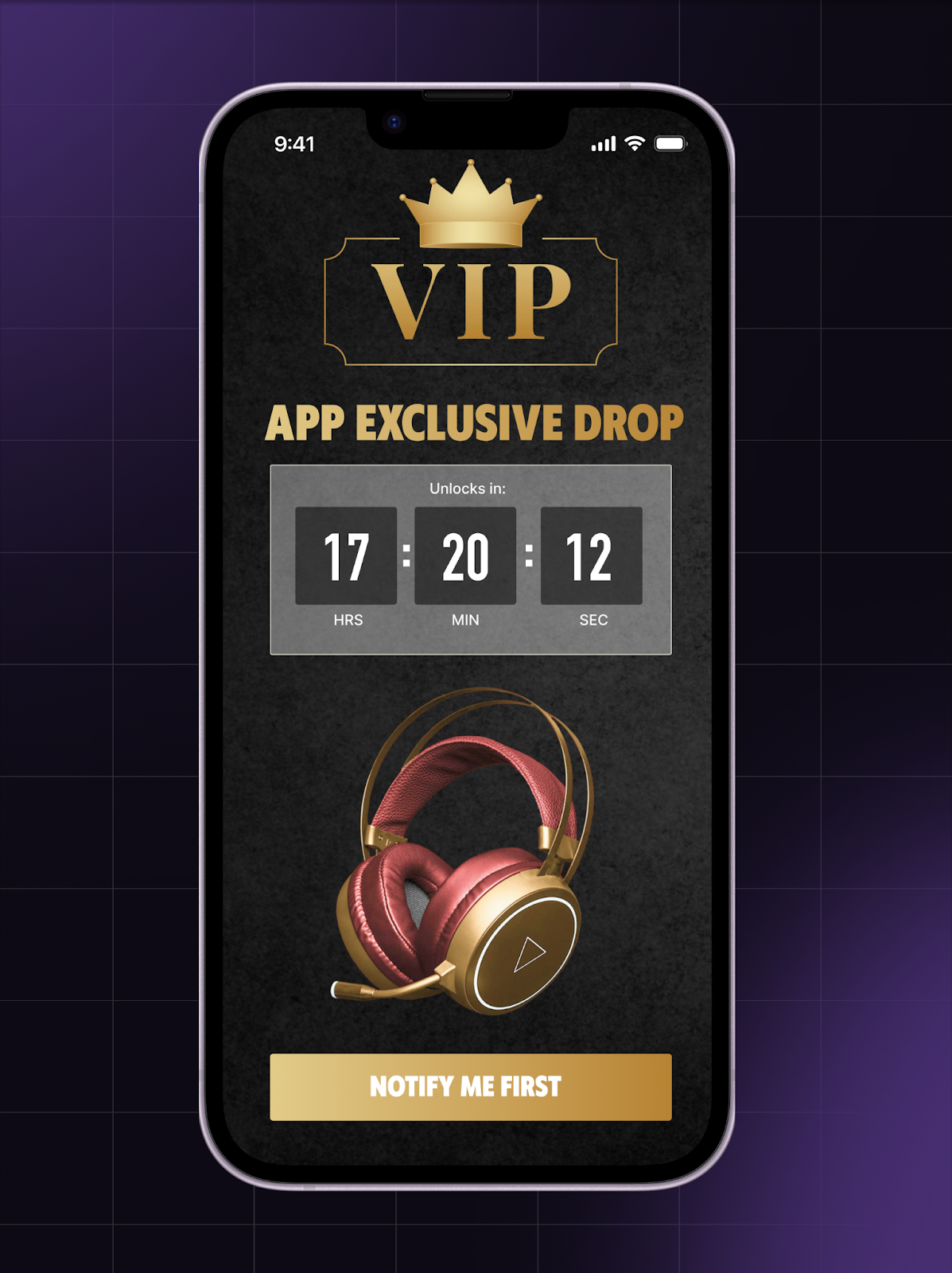
Offer early access to launches, restocks, or limited collections inside the app with defined time windows.
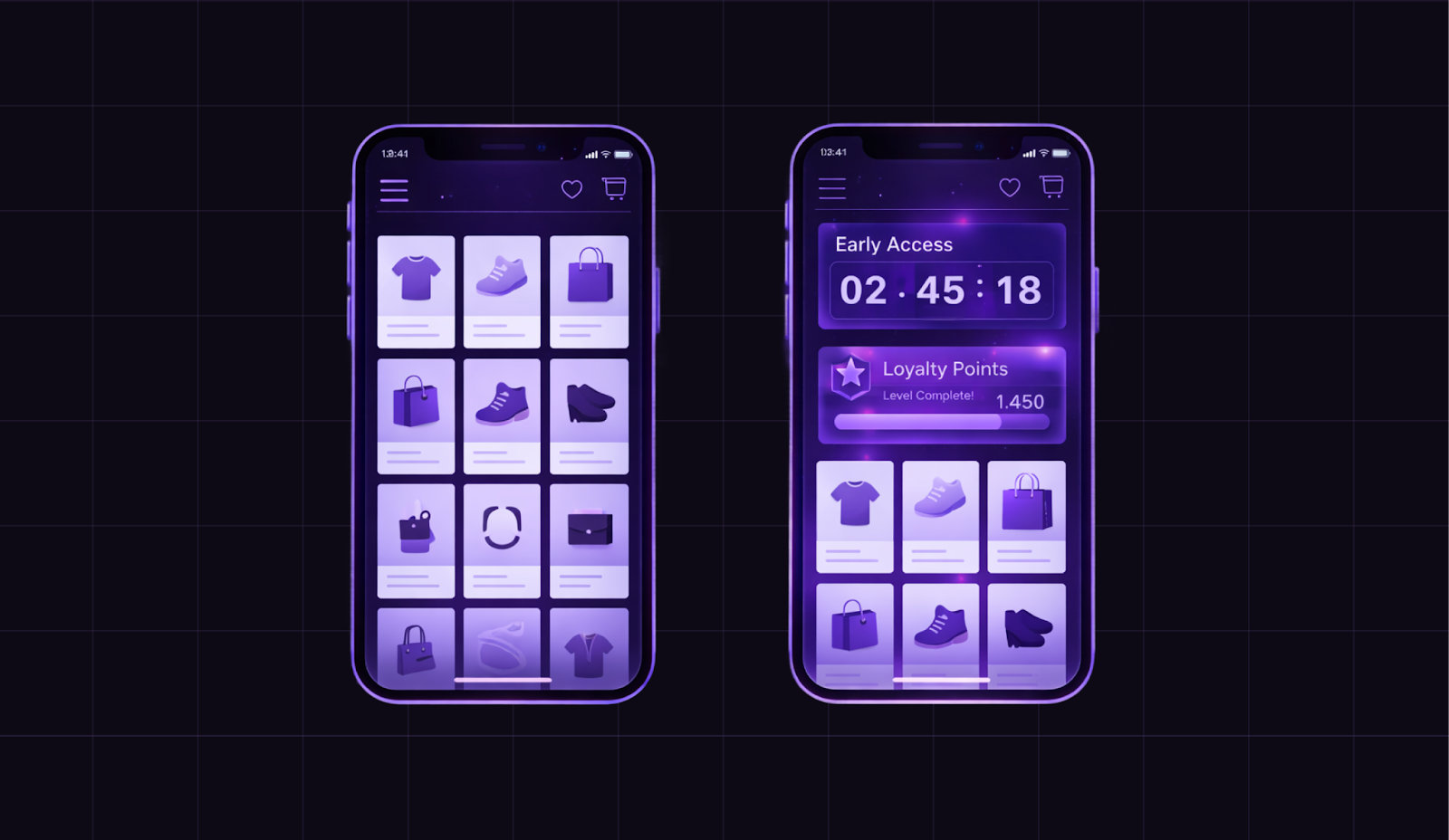
Surface loyalty status, points balance, and tier progress immediately upon first login.
Run app-only drops or previews that reward high-intent customers with priority visibility.
Enable faster reordering through saved preferences, payment methods, and replenishment reminders tied to purchase cadence.
Each of these incentives strengthens lifetime value because it improves frequency, conversion rates, and repeat purchase probability. Customers return for access and continuity, not for one-time savings.
Align these incentives with your lifecycle segmentation. Invite repeat purchasers into early-access flows. Invite loyalty members to track progress inside the app. Invite high browse-depth visitors to unlock restock alerts through push notifications.
When your incentive reinforces ownership, speed, and priority, your app becomes a retention layer rather than a promotional channel.
6. Leverage launches, drops, and restocks to drive installs
Launches, limited drops, and restocks concentrate demand into defined windows. During these moments, customers actively monitor timing, availability, and access. That behaviour creates one of the strongest opportunities inside your mobile app marketing strategy.
When you connect app adoption to a time-bound event, you give potential users a clear action to take immediately.
Structure launch-led install campaigns around defined access rules:
Announce that the drop goes live inside the app 30–60 minutes before the website release.
Send SMS and email marketing reminders linking directly to the app store listing before launch time.
Trigger push notifications the moment the collection unlocks for app users.
Promote back-in-stock alerts available exclusively through the app for high-demand products.
Unlock VIP access based on loyalty tier or past purchase behaviour, visible only after installation.
These mechanics tie installation to participation. Customers install because they want entry, alerts, or priority, not because they are browsing casually.
Coordinate the message across social media, landing pages, and your app store listing. If a customer sees early-access messaging on TikTok or Instagram, the same positioning should appear in screenshots and descriptions inside the iOS App Store and Google Play.
Launch-driven mobile app marketing increases install conversion rates because it aligns with active intent. It also improves retention rates when customers return consistently for future drops.
When you anchor installs to defined revenue events, you transform app growth from passive acquisition into structured participation.
Best practices when promoting your app
Once your install value proposition is clear and positioned at high-intent touchpoints, execution determines performance. The best practices below ensure that installs translate into active users rather than dormant downloads.
1. Measure what actually drives app adoption
Installs only matter when they lead to repeat behaviour. If you want your mobile app marketing strategies to improve retention and lifetime value, measure how users behave after they download.
Start by tracking adoption quality and focus on these key performance indicators:
Install rate by traffic source to identify which digital marketing channels bring in high-intent app users.
Install-to-first-session rate to see how many new users open the app within 24 hours.
Install-to-second-purchase rate to understand whether the app influences repeat buying.
App-engaged LTV compared to non-app shoppers to quantify long-term revenue impact.
Review these numbers together, not individually.
For example, if install rates are high but first-session rates are low, your onboarding flow or deep-link routing needs improvement. Similarly, if users open the app but don’t purchase again within 30 to 60 days, your in-app merchandising or lifecycle messaging requires refinement.
Measure each step deliberately. When you identify where drop-off occurs, you can adjust targeting, messaging, and segmentation with precision. This approach improves retention, strengthens monetization efficiency, and increases lifetime value without expanding ad spend.
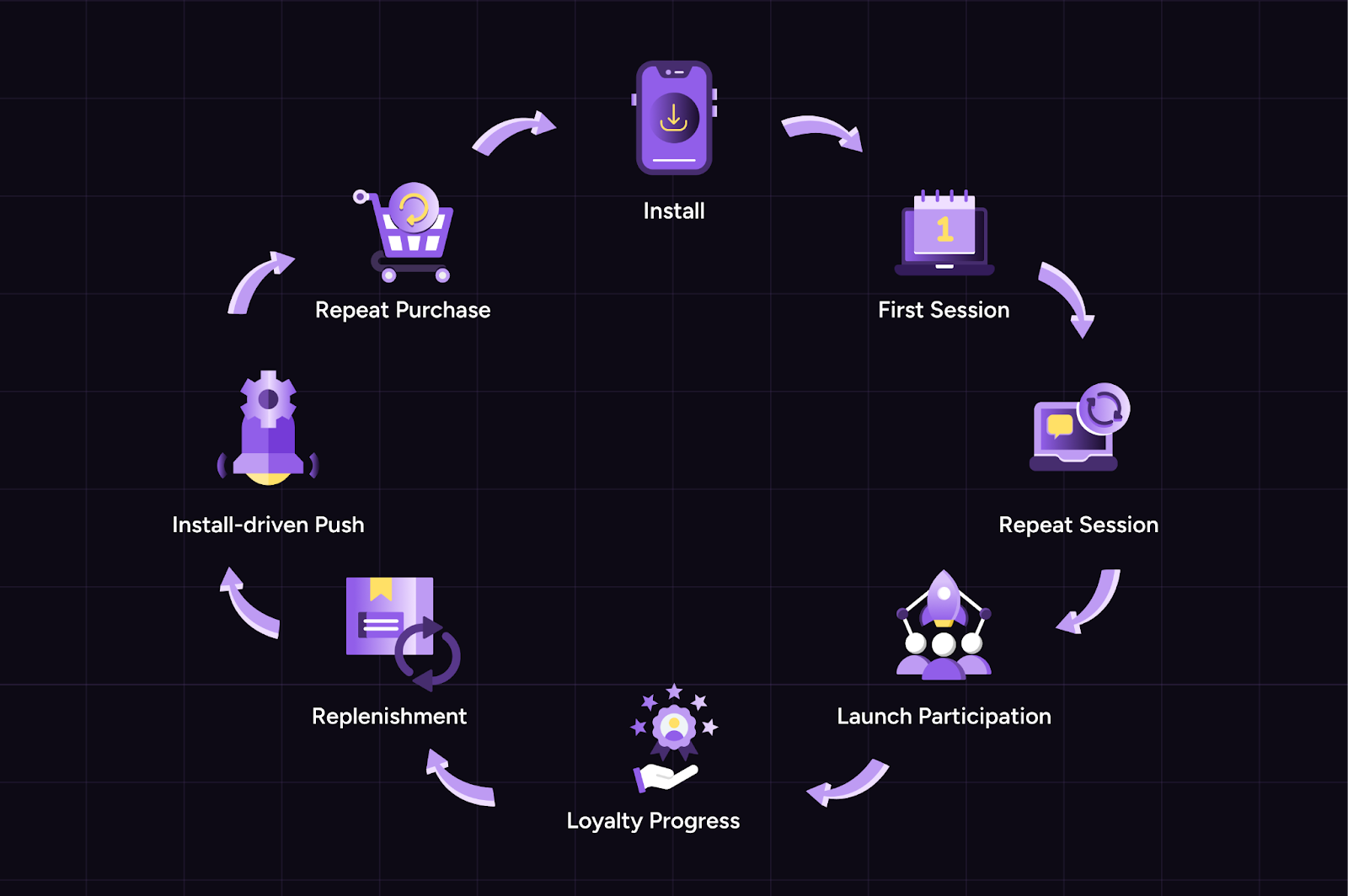
2. Build app adoption as a system, not a campaign
Sustained app growth comes from coordination. When install prompts, access rules, and post-install engagement align across your marketing channels, adoption becomes predictable.
Design your mobile app marketing strategies as an ongoing system tied to behaviour and lifecycle stage. A strong adoption system includes:
Clear install reasons that connect to access, speed, loyalty visibility, or launch priority.
Lifecycle-timed prompts triggered by purchase recency, browse depth, loyalty milestones, or upcoming drops.
App-only moments such as early access windows, restock alerts, and VIP previews that reinforce continued usage.
Consistent post-install engagement through push notifications, SMS, and email marketing tied to real-time user behavior.
This coordination ensures that installs lead to active users and repeat sessions. Each channel supports the same objective: increasing customer lifetime value and retention rates.
Platforms like Superfans.io enable this structure by coordinating app installs, access-based incentives, and lifecycle engagement within a single owned environment.
By integrating personalization, loyalty logic, and high-intent push notifications, Superfans.io helps brands sustain app adoption over time and strengthen measurable revenue impact.
3. Reduce install friction at the moment of intent
Install conversion increases when the prompt appears after a decision has already formed. When a customer has completed a purchase, unlocked a reward, or requested a restock alert, intent is clear. At that point, the app becomes a tool to complete the action.
Place install prompts immediately after high-commitment moments:
Display the app download option on the post-purchase confirmation screen and connect it to real-time order tracking and mobile push notifications.
Gate early-access collections behind app entry during launch previews and timed drops.
Send back-in-stock confirmations through SMS or email with a deep link to install and receive real-time inventory alerts.
Trigger loyalty milestone notifications that direct customers to the app to view updated tier status or unlock rewards.
In each case, you attach the app to an action the customer already values. You’re not introducing a new idea, but extending an existing one.
Allow the customer to explore, compare, and decide. Once they complete a purchase, request an alert, or unlock a reward, introduce the app as the tool that gives them faster tracking, priority access, or real-time updates.
When you align install prompts with decisive moments, install-to-first-session rates rise and early churn declines. The app becomes part of the workflow instead of another marketing interruption.
4. Segment install CTAs by customer state
Your install message should reflect the customer’s current relationship with your brand. A first-time buyer and a high-value repeat customer respond to different incentives. When you align the CTA with the lifecycle stage, install conversion improves, and post-install engagement strengthens.
Define install logic by customer state.
First-time buyers respond to order tracking, delivery visibility, and faster reordering. Introduce the app on the confirmation page and inside follow-up email marketing with a clear utility message.
Repeat buyers value replenishment timing, saved preferences, and quicker checkout. Trigger install prompts 30 to 60 days after purchase when repurchase probability increases.
High-value customers expect priority. Offer early access windows, VIP previews, and tier visibility inside the app before public releases.
Advocates and engaged community members respond to previews, feedback access, creator collaborations, and insider updates tied to launches.
This way, you avoid generic messaging. Each segment receives a defined reason to install based on demonstrated user behavior, purchase cadence, and lifetime value contribution.
After installation, the experience should immediately validate the reason they downloaded. If a customer installed for early access, the first screen should reflect that priority. If they came for easy replenishment, reorder options should be visible without searching. If loyalty tracking motivated the install, points and tier progress should be easy to find.
When the app reflects the promise made in the CTA, the transition feels seamless. That continuity increases the likelihood of a second session and strengthens early retention.
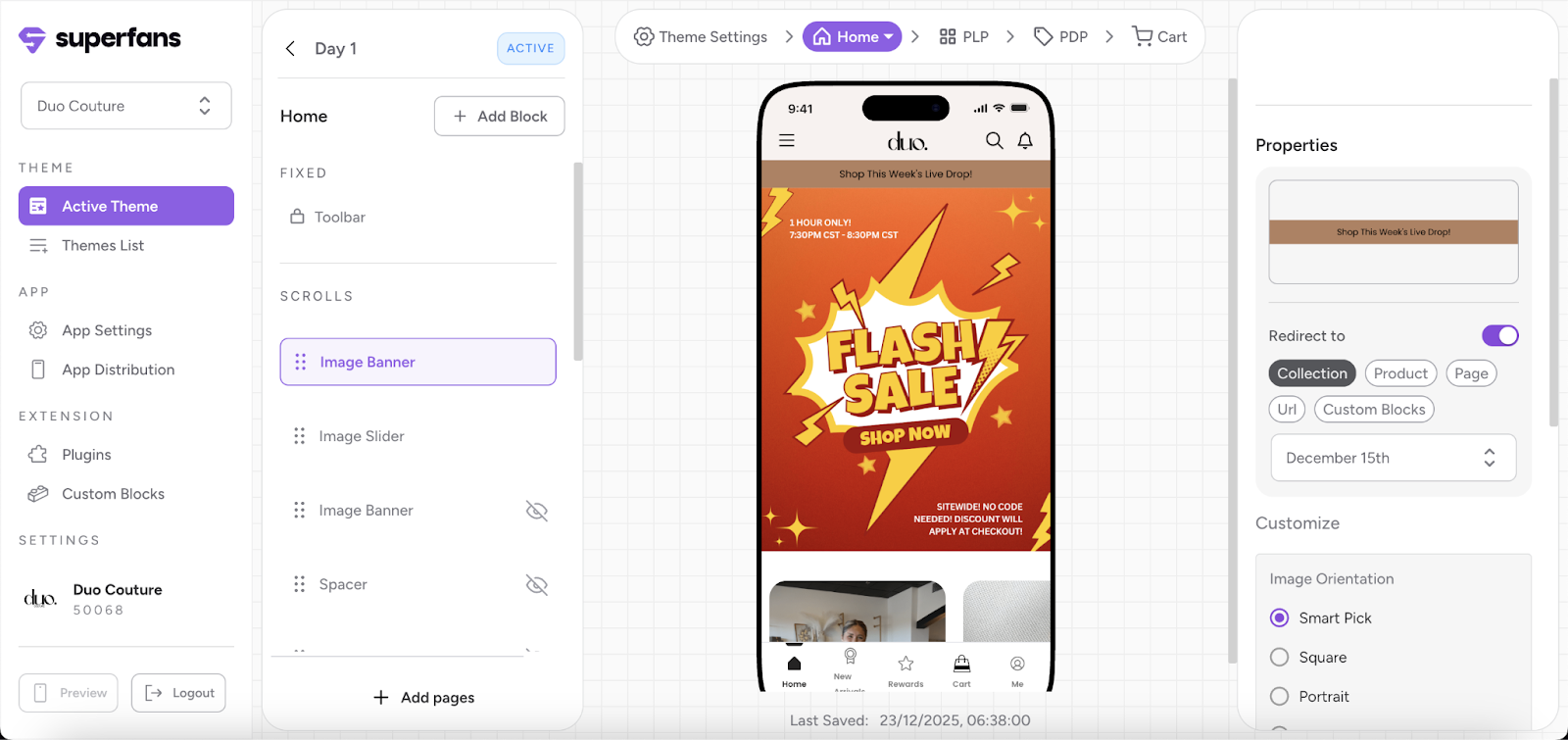
Platforms like Superfans.io support this by allowing brands to customize home screens by segment, behavior, and lifecycle stage. This way, the install message aligns with the first in-app experience, increasing retention and active users over time.
5. Deliver value in the first app session
The first session determines whether the new user stays active or churns. The moment someone opens your app, they expect to see the benefit that motivated the download. If that benefit isn’t visible immediately, engagement drops.
Design the first screen around the reason the user installed. A launch-driven install should open to the gated collection. A post-purchase install should highlight order tracking and reorder options. A loyalty-driven install should surface points and tier status immediately.
Structure the session with focus:
Acknowledge the reason for installation through context-aware modules tied to launch timing, reward status, or recent purchase behavior.
Surface one primary action, such as entering a gated collection, tracking an order, unlocking a reward, or reordering a product.
Minimize friction by pre-filling saved preferences and reducing unnecessary navigation steps.
The opening screen should feel purposeful. When users land on a generic homepage, a full catalog view, or a multi-step walkthrough before reaching value, momentum slows.
Structure the first session so the benefit appears instantly and the next step is clear. This keeps attention focused and increases the likelihood of return visits.
When the first session resolves the original intent quickly, second-session rates increase and early churn declines. Clear direction improves user experience, strengthens retention, and supports long-term lifetime value.
Turning installs into long-term engagement and retention
Install volume alone doesn’t strengthen your business. Retention improves when installs connect to defined moments in the customer journey and continue delivering value after download.
Anchor your marketing to real behavioural triggers such as launches, early access windows, loyalty milestones, and repeat purchase timing. These moments already carry intent. When the app supports that intent, engagement continues beyond the first session.
Without a structured post-install experience, new users leave quickly. If the app doesn’t reinforce access, convenience, or status within the first few sessions, these shoppers are most likely to drop-off.
Focus on deliberate execution. Start with one strategy from this guide and implement it fully. For example, activate post-purchase installs with simplified order tracking or nudge launch-based installs with gated access.
Test that approach with your most engaged segment, such as repeat buyers or loyalty members. Monitor early behavioural signals, like:
First session opens within 24 hours
Second sessions within 7 days
Conversion rates inside the app
Repeat purchases within 30 to 60 days
Use these signals to decide what to scale across additional segments or marketing channels.
How Superfans simplifies app adoption
Launching and scaling a mobile app often feels operationally heavy. Teams anticipate added bandwidth, new workflows, and ongoing optimization requirements. App adoption becomes difficult when install strategy, lifecycle messaging, and experience design operate separately.
Superfans.io simplifies this process by structuring app growth as a coordinated system. The platform supports:
Designing strategic install moments tied to launches, loyalty milestones, and post-purchase flows.
Aligning lifecycle-triggers across push notifications, SMS, and email marketing.
Setting up access-based incentives such as early entry, VIP visibility, and gated drops.
Tracking install-to-repeat purchase with clear performance metrics.
Optimizing your strategy based on retention rates, conversion rates, and LTV.
This removes the operational friction that slows app growth. Your team does not need to manage install logic, personalization flows, and segmentation manually across disconnected tools.
Through bi-weekly strategy sessions, the Superfans.io team works directly with your brand to refine launch sequencing, optimize onboarding, and strengthen post-install engagement. The app evolves alongside your marketing funnel and merchandising calendar.
Book a demo to see how your mobile app marketing strategies can turn engagement into long-term retention.
Thank you! Your submission has been received!
Oops! Something went wrong while submitting the form.
This is some text inside of a div block.
"Looking for creative push notification ideas? Check out our free templates and start customizing!"




.png)



.png)